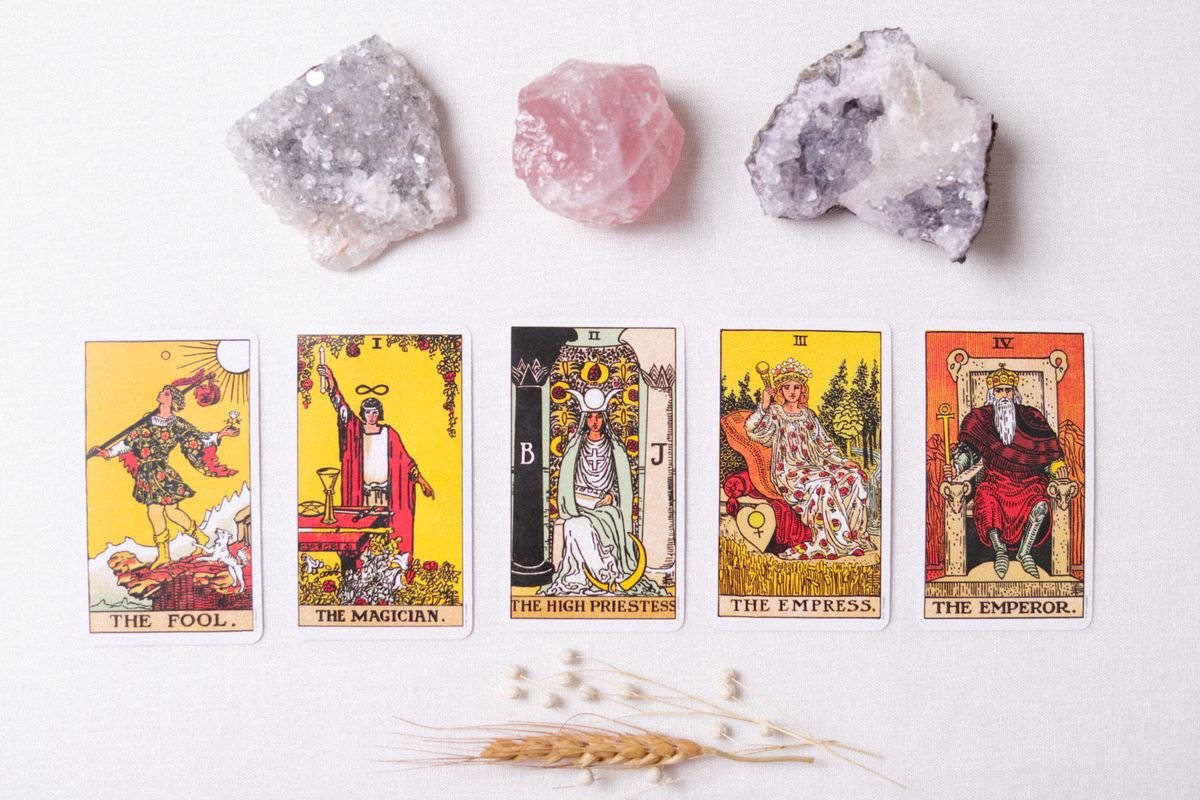
Pick a Card Tarot Reading for Love


A pick a card tarot reading for love starts with a simple choice. A reader lays out three or four piles of cards, each one marked with a small object or a symbol, and you pick the pile that draws you. That pile holds your message. The format is short, visual, and easy to follow, which is why it has become one of the most watched kinds of tarot content online. This page explains how the format works, gives you four named love piles with a different question for each one, walks through a self reading step by step, and states the honest limits so you know what the cards can and cannot do.
Why Pick a Card Took Off on Reels
Pick a card readings spread fast on short video because the format fits the screen. A viewer sees three piles, hears a question, and makes a choice in seconds, all before the video ends. That quick participation is the appeal. Unlike a long reading that asks a viewer to sit still for twenty minutes, a pick a card video turns watching into doing, and the choice feels personal even when thousands of people are watching the same video at the same time.
The numbers behind the trend are striking. In a library of more than 900 viral tarot reels counted by Aubrium on 12 November 2026, pick a card readings appeared from 37 creators, and the median reel in that set reached 13 times its account follower count. One pick a card reel in the set passed 1.2 million views. Those figures describe reach, not proof: a video can travel far because it is fun to watch, not because its message is true. But they do show that the format has become a shared language. When a friend says they picked pile two, many people now know exactly what that means.
How a Pick a Card Reading Works
Every pick a card reading follows the same four moves, whether it is a video, a live session, or a spread you lay out yourself. First, the reader states a question, out loud and in plain words. Second, the reader lays out the piles, usually two to four, each one face down with a marker on top. Third, you choose one pile, by instinct rather than by logic. Fourth, the reader turns over the cards in your pile and reads them as an answer to the question. The whole reading often uses only three cards per pile, which keeps it short and focused.
The question matters more than the cards. A clear question gives the reading a shape, while a vague question gives it nowhere to go. Compare two questions: the first asks what you should know about your love life right now, and the second asks whether the person you met last week sees a future with you. The second question is narrower, it names a person and a time, and the cards can speak to it directly. The first question is so wide that almost any card could fit it, which makes the reading feel vague even when the reader is skilled.
Pile One: The Open Door
The Open Door is the pile for a single reader who wants to know what to look for in a new connection. Its question is simple: what should I notice when the next person comes along? The three cards in this pile are read as three things to watch for. The first card shows a quality to value, such as honesty, steadiness, or humor. The second card shows a pattern to avoid, such as rushing, mixed signals, or a habit of saying one thing and doing another. The third card shows a small step to take, such as saying yes to an invitation you would normally refuse.
Take a sample draw. The Ace of Cups opens the pile, often read as an open heart and a new feeling. Next comes the Seven of Swords, often read as something held back or left unsaid. The Two of Cups closes it, often read as a mutual bond built on respect. Taken as one message, the pile suggests valuing openness, watching for evasiveness, and taking a step toward a real meeting rather than a long exchange of messages. That is a usable answer, and it comes from the cards in combination, not from any single card alone.
Pile Two: The Honest Mirror
The Honest Mirror is the pile for a couple who want to know what the relationship needs right now. Its question is direct: what does this bond need most in the coming weeks? The three cards are read as three parts of one answer. The first card shows what is strong between you, the part worth protecting. The second card shows what is strained, the part that needs care. The third card shows one practical change that could help, small enough to try within a week.
Here is the pile in action. The Ten of Pentacles leads, often read as a stable home and shared effort, while the Five of Wands follows, often read as friction and crossed wires. The Four of Swords finishes the set, often read as rest and a pause. Together the three suggest that the foundation is solid, that daily friction is the problem, and that rest, rather than another long talk, may be the change that helps most. That is a concrete suggestion, and it can be tested in real life within days. For a longer spread built for couples, the love reading tarot spread page sets out a fuller layout for the same kind of question.
Pile Three: The Quiet Letter
The Quiet Letter is the pile for no contact and ex questions, and it is the pile that needs the most care. Its question is: what does this silence mean, and what should I do next? The three cards are read as three separate pieces. The first card reflects the silence itself, what it may look like from the other side. The second card reflects your own state, what you are carrying while you wait. The third card reflects a next step, and that step is often about your own life rather than about reaching out.
Try the pile with real cards. The Hermit comes first, often read as a need for space and time alone. The Three of Swords sits in the middle, often read as grief and a hurt that is still fresh. The Eight of Pentacles ends the row, often read as steady work on a skill or a project. As a whole, the pile suggests that the silence may be about space rather than rejection, that your hurt is real and deserves care, and that the next step is a piece of work you can do for yourself. That reading comforts without promising a return, and the difference matters. If you are weighing whether to reach out, the best tarot spread for ex questions page gives a fuller layout for the same decision, and the will my ex come back tarot guide looks at the question in more detail.
Pile Four: The Next Step
The Next Step is the pile for a decision: stay, wait, or move on. Its question is: what is the wisest next step in my love life? The three cards are read as three options held side by side. The first card shows what staying the course could look like. The second card shows what waiting could look like. The third card shows what moving on could look like. No card is labeled good or bad. Each one shows a path, and the reading asks you to weigh them honestly.
A last draw shows the pattern. Start with the Four of Wands, often read as celebration and a stable bond. The Hanged Man comes second, often read as a pause and a new way of seeing, and the Fool rounds out the pile, often read as a fresh start and an open road. The three together lay out three real paths: a stable bond worth celebrating, a pause that changes how you see the situation, or a new start. The cards do not choose for you. They show the shape of each choice so you can choose with your eyes open.
This pile works best when you are ready to hear any of the three answers. If you have already decided and only want the cards to agree with you, the reading will feel frustrating, because one of the cards will almost always point the other way. That frustration is useful information. It tells you that the decision is already made and that the cards are being asked to bless it rather than to guide it. When that happens, set the cards aside and act on the decision you have already reached.
How to Do a Pick a Card Reading for Yourself
A self reading needs a deck, a clear question, and a notebook. Shuffle the cards while you hold the question in mind, then lay out three piles of three cards each, face down, and mark them with three different objects from around the room. Look at the piles for a few seconds and choose the one that draws you. Turn its cards over, one at a time, and write down what each card suggests to you before you look up any meaning. That first note is the most honest part of the reading, because it records what you saw before outside voices joined in.
After the first note, you can look up the standard meanings and add a second note underneath. Compare the two. Often the first note and the standard meaning agree on the feeling but differ on the detail, and that difference is worth keeping. The first note shows what the card meant to you in the moment. The standard meaning shows what the card has meant to many readers over time. Both are useful, and neither one cancels the other.
Close the reading with a short summary: one sentence about what the pile said, and one sentence about what you will do next. Then put the cards away and return to the note after a week. That return visit is the part most readers skip, and it is the part that teaches the most. A week later you can see whether the reading named something real or only echoed a passing mood. For a fuller grounding in the craft, the how to read tarot for yourself guide covers the basics of working alone, and the how to ask tarot questions page shows how to shape a question that a spread can actually answer.
Honest Limits of Pick a Card Readings
A pick a card reading cannot predict the future, name a specific person, or set a date for an event. It cannot tell you whether an ex will return, whether a new person is the one, or whether a relationship will last. Those questions rest on the choices of real people, and no set of cards can make those choices for them. A reader who promises a definite answer to such a question is offering more than the format can give.
A pile message speaks to thousands at once, so if yours leaves a love question open, bring it to a reader who can answer for you. First 3 minutes FREE — every time, for every reading, with all advisors.
Choosing a Reader You Can Trust
Trust in a pick a card reader comes from the way they handle the limits above. A good reader states the question clearly, reads the hard cards as well as the warm ones, and never promises a specific outcome. A reader who only ever delivers good news, who claims a pile can name your future partner, or who pressures you to book a paid session before the free reading has finished, is showing you how they work, and that showing is worth believing.
If a reading touches a painful subject, such as a breakup or a long silence, give yourself time before acting on it. The heartbreak tarot spread page offers a slower layout for the weeks after a split, and the love tarot online guide looks at how online love readings work in general. A pile can open a question. It cannot close one, and the closing belongs to you.
Frequently Asked Questions
What is a pick a card tarot reading?
A pick a card tarot reading is a short reading built around a choice. The reader lays out two to four piles, often face down cards with a crystal, a flower, or a symbol on each one. You choose the pile that draws you, and the reader turns over its cards and reads them as an answer to your question. The choice is the heart of the format.
How do I choose a pile?
Choose by first instinct, not by logic. Look at the piles for a few seconds, notice which one holds your attention, and stay with it. Do not switch after the cards are turned over because you liked another pile better. The pile you picked first is the reading, even if the message is not the one you hoped for.
Can a pick a card reading tell me if my ex will come back?
No. A pick a card reading cannot tell you whether an ex will return, and it cannot name a date for it. It can help you look at the situation clearly: what the silence may mean, what you still want, and what a next step could look like. A return depends on two real people and their choices, not on a set of cards.
How accurate are pick a card readings?
Accuracy is the wrong test for this format. A pick a card reading is a tool for reflection, and its value is measured by whether it helps you think clearly about a question you already carry. A reading that names a feeling you had not put into words has done its job, even if nothing it says comes true in a literal sense.
Can I do a pick a card reading for myself?
Yes. Lay out three piles from your own deck, give each one a clear question, choose the pile that draws you, and write down what the cards suggest before you look for a meaning online. The written note matters more than the cards, because it records what you thought before outside voices joined in.
Last updated: November 27, 2026