
Palm Reading Online: How a Reading Works From a Photo
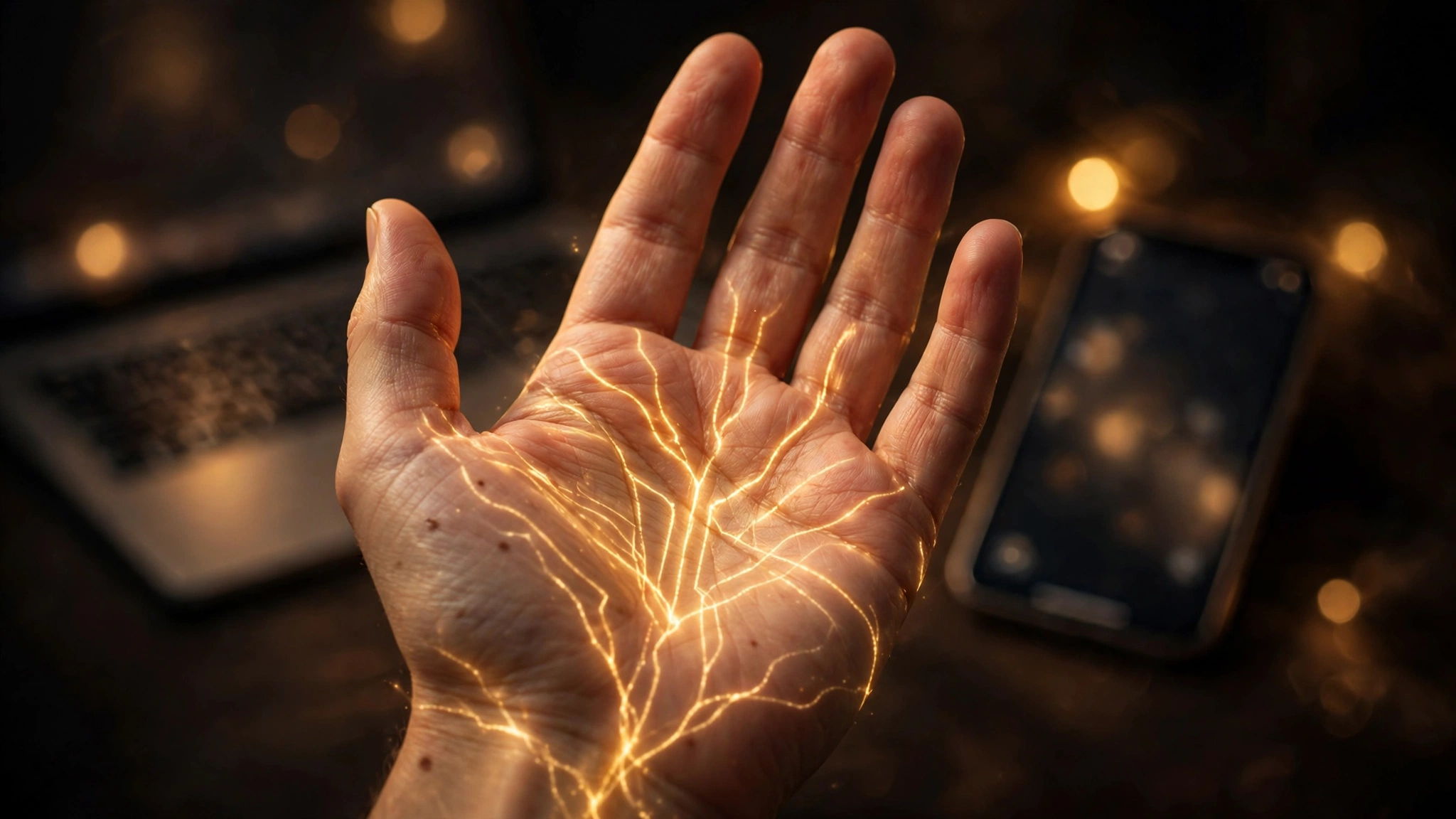
Palm reading online works from photographs of your hands. You send clear pictures, and a reader studies the lines, the mounts, and the shape of each hand, then walks you through what the tradition says they mean. This guide explains palm reading online from the start: how the lines form, what each line is read for, and which questions work best.
What Palmistry Is
Palm reading is also called palmistry, and in older literature chiromancy. It reads the lines, mounts, shapes, and markings of the hand to describe character and life tendencies. Hand reading has documented roots in ancient India, in the Samudrika Shastra, in China, and in the classical Mediterranean world, where Aristotle and the Roman physician Galen wrote about reading hands. The modern Western system was largely shaped by the French palmist Cheiro, born William John Warner in 1866. The lines themselves are real physical features: the three long creases of the palm are flexion creases, formed before birth, around the twelfth week of pregnancy, where the skin folds when the hand closes.
The Four Major Lines
Four lines carry most of the meaning in a reading: the life line first, then the head line and the heart line, and last the fate line, which not every hand has. Learning to find each one takes less than a minute once you know where to look.
The life line: vitality and change. The life line begins between the thumb and index finger, then arcs down around the thumb toward the wrist. The most common misunderstanding about palmistry sits on this line: many people believe its length shows how long a person will live. It does not work that way. Cheiro said so plainly. A study at the University of Adelaide in 2019 measured 60 bodies and found no significant link between life line length and lifespan. Instead, the depth and clarity of the line, and any breaks or islands along it, are read as signs of vitality and change.
The head line: thinking and decisions. The head line starts close to the life line and runs sideways across the middle of the palm. It is read for thinking style and how a person makes decisions, rather than for how clever they are. A long and clear head line is linked with careful, analytical thinking. A line that bends down toward the wrist points to more imaginative and intuitive thinking. Breaks or chains in the line point to hard seasons for the mind, or times of change.
The heart line: feelings and bonds. The heart line starts below the little finger and crosses the upper palm, and it sits higher than the other long lines. It speaks to feelings, bonds, and matters of the heart. When it curves high and ends near the index finger, the tradition links it with idealism in love. When it ends near the middle finger, the reading points to a grounded and practical approach. A flat line is read as feelings kept in reserve, while a high curve is read as feelings worn openly.
The fate line: career and direction. The fate line, when a hand has one, runs straight up the palm toward the middle finger. It is read for career, direction, and how much outside forces shape a life. Plenty of hands have no fate line at all, and that is normal, not a flaw. Where the line starts, how clear it runs, and whether it breaks or branches change the reading. Minor lines add detail: the sun line below the ring finger is linked with recognition, and the short lines along the edge under the little finger are linked with committed bonds.
The Mounts: The Raised Pads of the Palm
The mounts are the raised pads of flesh under each finger and around the edge of the palm, the other half of a traditional reading. Lines are read for events, and mounts are read for temperament. Each mount is named after a planet. Jupiter sits beneath the index finger and is linked with ambition and leadership. Saturn sits beneath the middle finger and is linked with discipline and structure. Apollo, also called the Sun, sits beneath the ring finger and is linked with creativity and success. Mercury sits beneath the little finger and is linked with communication and resourcefulness. Venus sits at the base of the thumb and is linked with love and vitality. The Moon sits on the lower outer palm and is linked with imagination and intuition. A mount means little on its own and is always read beside the other mounts. A well developed mount suggests strength in that area, while a flat mount has its own reading.
Hand Shapes and Which Hand to Read
Before any line is read, a palmist looks at the shape of the hand. Many systems identify four basic hand types linked with the classical elements: Earth hands have a square palm and short fingers, Air hands have a rectangular palm and long fingers, Water hands have an oval palm and long fingers, and Fire hands have a long palm and short fingers. These broad types suggest a temperamental baseline.
In most traditions the dominant hand is the one that shows the life you have lived through your choices, while the non-dominant hand shows the potential you were born with. Many readers look at both hands together, and an online reading should always ask for both. The lines change as life goes on, and the heart line and the fate line move the most. That is why palmistry is a map of tendency, not a fixed destiny.
How an Online Palm Reading Works
An online palm reading starts with photographs. Take them in good light with the palm facing up and the fingers relaxed. Send both hands, plus a close-up of each palm so the lines are clear, and a photo of the back of each hand. Tell the reader which hand is dominant and add your main question. A reader will usually reply with a written reading or a live chat session, walking through the hand shape first, then the four major lines, then the mounts, and then the question you asked. A chat reading works well here, because you can ask follow-up questions as each line is explained.
Five Good Questions to Ask
The quality of a palm reading depends on the questions. Ask what the strongest line in your hand is and what it points to. Ask what the heart line says about how you attach to people. Ask whether the fate line suggests a directed career path or a self-made one. Ask which mount stands out most and what strength it points to. Avoid questions that ask the reader to predict death, diagnose illness, or name a fixed future. Responsible palmists never predict illness from a hand, and no line can settle a medical question.
An Illustrative Example: A First Online Palm Reading
This example is illustrative, not a real person's story.
Sara is 34 and works as a teacher. She has always been curious about palmistry but never visited a reader. She books an online palm reading and sends photos of both hands in daylight. The reader starts with her hand shape, a water hand, and then walks through the lines. Her heart line curves high toward the index finger, which the tradition links with idealism in love. Her head line runs long and clear. Her fate line is faint and broken in two places, which the reader describes as a changed path. Sara asks about her career, and the reader points to the breaks in the fate line and the strong mount of Jupiter as a sign of leadership that arrived through change. Sara leaves the reading with one practical step: to ask her school about a mentoring role. The example shows what a good online reading does: it gives language for patterns the person already knows.
Using This Guide in a Chat Reading
If you would like to try palm reading online, a chat reading is a natural fit, because you can send photos and ask questions as each line is explained. Prepare your photos before you book and write down your main question. If you would like to try a palm reading with a reader on PsychicSmile, open a chat reading and ask for a palm reading by name. First 3 minutes FREE — every time, for every reading, with all advisors.
To learn the basics first, read our guide to what palmistry is. If you are new to readings, start with what a psychic reading is and learn how to choose a psychic reader. To compare formats, read online versus in person readings and email psychic reading before you book. You can also try tarot reading online if you want a second kind of reading to compare.
Frequently Asked Questions
What is palm reading?
Palm reading, also called palmistry or chiromancy, looks at the lines, mounts, shapes, and markings of the hand and reads them as signs of character and life tendencies. It is read as a map of tendency, not a fixed destiny.
Does the life line show how long I will live?
No. The length of the life line does not indicate how long a person will live. Cheiro said so plainly, and a 2019 study at the University of Adelaide measured 60 bodies and found no significant link between life line length and lifespan.
What are the four major lines of the palm?
The life line and the heart line carry most of the meaning, along with the head line, and the fate line adds career and direction when a hand has one.
Which hand is read in palmistry?
In most traditions the dominant hand is the one that shows the life you have lived through your choices, while the non-dominant hand shows the potential you were born with. Many readers look at both hands together to get the fuller picture.
How does a palm reading work online?
You send clear photos of both hands in good light, palm up, plus close-ups of each palm, and tell the reader which hand is dominant and what question you most want answered. The reader then walks through the hand shape, the four major lines, and the mounts, usually in a live chat session.
Last updated: November 15, 2026
