Matrix of Destiny Compatibility


Matrix of Destiny compatibility is a way of reading a relationship by placing two birth charts side by side and looking for where the patterns agree and where they pull in different directions. The method starts with a birth date only, so any couple can try it with nothing more than two dates of birth. Each chart blends Pythagorean numerology with the 22 Major Arcana of tarot, which gives every number a picture and a story as well as a value. The comparison focuses on two parts of each chart above all else: the love line, which speaks about closeness and affection, and the center, which speaks about the core of a person.
What Matrix of Destiny Compatibility Means
Compatibility in this system is not a score and not a verdict. No single number decides whether two people belong together, and no chart can rank a couple as good or bad. The reading works more like a conversation between two maps. Each person brings a chart built from a birth date, and the comparison looks for shared themes, useful contrasts, and places where the two maps point in opposite directions. A shared theme suggests an area where understanding comes easily. A contrast suggests an area where one partner may need to explain more, listen longer, or compromise more often. Both kinds of finding are useful, because a relationship needs ease in some places and growth in others.
People turn to this kind of comparison for a plain reason: it gives fresh language for old questions. Couples ask why one partner talks through every feeling while the other goes quiet, why money talks go smoothly while holiday plans turn tense, or why a bond feels strong in private and shaky in public. A Matrix comparison answers with patterns rather than blame. It says that one partner may lead with action while the other leads with reflection, and that neither style is wrong. That shift in language can lower the heat in a hard talk and open room for a practical fix. The reading is best used as a prompt for honest talk, not as a judge that hands down a result.
The Two Ingredients: Numbers and Arcana
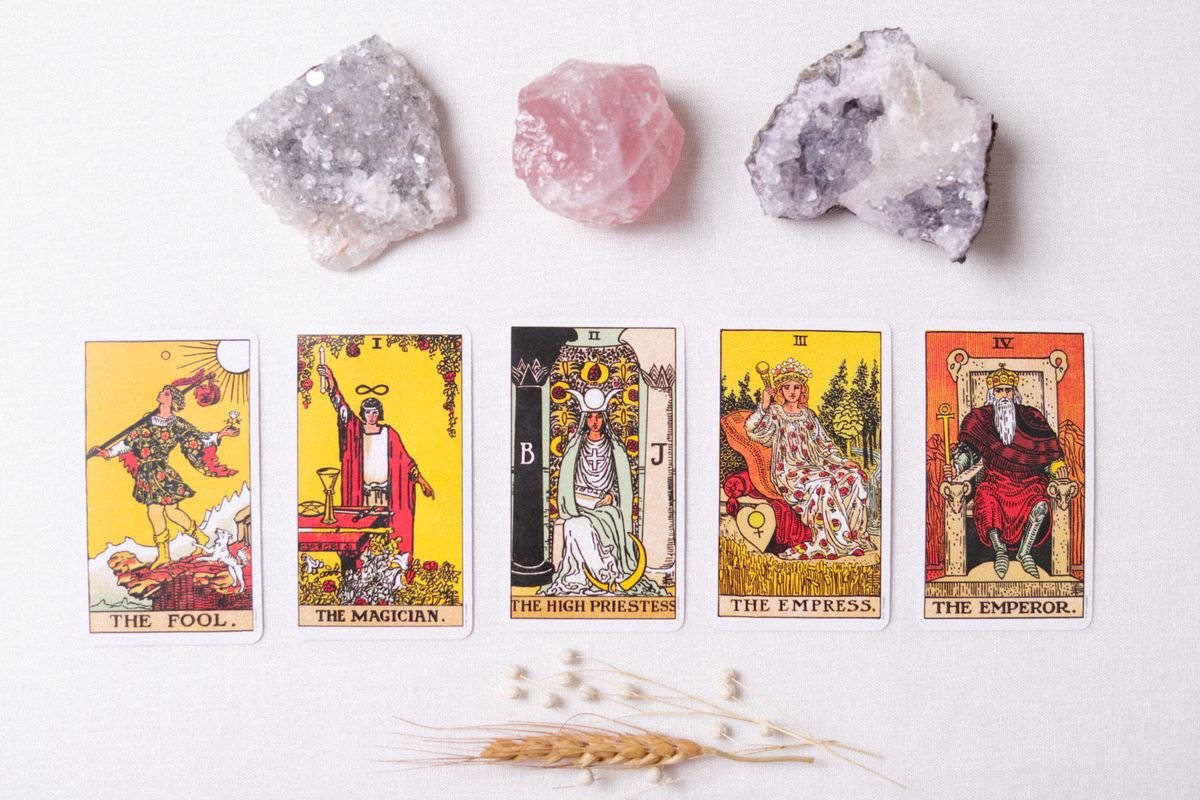
The first ingredient is Pythagorean numerology, the practice of reducing the digits of a birth date to a small set of core figures. The digits are added together, and any total above 22 is reduced again by adding its digits, until a number between 1 and 22 remains. That range matters, because it matches the second ingredient exactly. Each number from 1 to 22 pairs with one of the 22 Major Arcana cards, so every core figure carries both a value and an image. The number 1 pairs with The Magician, the card of initiative, clear speech, and starting things. The number 2 pairs with The High Priestess, the card of listening, intuition, and quiet depth. The number 5 pairs with The Hierophant, the card of tradition, steady values, and learning from what came before. The other numbers pair with the remaining cards in the same order, and each pairing adds a layer of meaning that a bare digit cannot carry alone.
The blend of number and picture is what makes the Matrix different from a plain numerology chart. A life path number calculator gives a single core number from a birth date, and that number marks a life direction. A Matrix chart gives a whole spread of numbers, each placed in a position with its own job, and each number wearing the face of an Arcana card. The destiny number meaning page and the soul urge number meaning page show how single numbers are read in the wider numerology tradition, and the Matrix builds on that same habit of reading numbers as character notes. The difference is scope: the Matrix reads several numbers together, so a person is described by a pattern rather than by one label.
The Love Line and the Center
The love line is the part of the chart read for closeness, affection, and partnership patterns. It points to how a person gives care and how they like to receive it, what draws them toward a partner, and where closeness can feel strained. A love line that leans toward open expression may describe a person who says what they feel quickly and expects the same in return. A love line that leans toward quiet loyalty may describe a person who shows care through steady acts, like keeping promises and showing up on hard days, rather than through grand words. Neither style is better. The trouble starts only when two styles meet without either partner knowing the other style exists, so one person feels unheard while the other feels unappreciated for care that was given in a different language.
The center is the core of the chart, read as the heart of a person and the place they return to under pressure. It is sometimes called the comfort zone, because it describes what feels natural when a person is tired, stressed, or unsure. Someone whose core leans toward action will want to fix a problem at once. A person with a reflective center will want to sit with a problem first and think it through. A person whose center favors order will want a plan before any step is taken. In a couple, the two cores show whether the partners meet the world in a similar way or in very different ways, and that difference shapes almost every shared decision, from how to spend a weekend to how to handle a crisis.
Worked Example: Two Birth Dates, Step by Step
The example uses two made-up people and two made-up birth dates. Ana was born on 14 March 1992. Ben was born on 2 November 1995. The steps below use a simple digit sum that many beginner guides use to find a center number, and every sum is shown in full so the arithmetic can be checked. The same steps can be repeated with any two birth dates.
Step one is the center number for Ana. Take every digit of the birth date: 1, 4, 0, 3, 1, 9, 9, 2. Add them in order: 1 plus 4 is 5, plus 0 is 5, plus 3 is 8, plus 1 is 9, plus 9 is 18, plus 9 is 27, plus 2 is 29. The total is 29, which sits above 22, so reduce it again: 2 plus 9 is 11. The total 11 sits inside the range of 1 to 22, so reduce it once more by the same rule used for the core numbers: 1 plus 1 is 2. The center number for Ana is 2, which pairs with The High Priestess. Her core means listening, intuition, and quiet depth, with a need for time alone to sort feelings before speaking about them.
Step two is the center number for Ben. Take every digit of the birth date: 2, 1, 1, 1, 9, 9, 5. Add them in order: 2 plus 1 is 3, plus 1 is 4, plus 1 is 5, plus 9 is 14, plus 9 is 23, plus 5 is 28. The total is 28, which sits above 22, so reduce it again: 2 plus 8 is 10. The total 10 sits inside the range of 1 to 22, so reduce it once more: 1 plus 0 is 1. The center number for Ben is 1, which pairs with The Magician. His core means initiative, clear speech, and starting things, with a need to act on an idea while it feels fresh rather than wait for a perfect moment.
Step three adds a second number for each person, taken from the day of birth alone. For Ana, the day is 14, and 1 plus 4 is 5, which pairs with The Hierophant. That number names steady values, respect for tradition, and a wish to build on what has already proved sound. For Ben, the day is 2, which pairs with The High Priestess. That number covers intuition and quiet attention, the same card that sits at the core of the chart for Ana. The day figure is a smaller note than the center number, but it adds texture, and in this pair it adds a useful link, because the card at the core of one chart appears in the day number of the other.
Step four is the comparison itself. Start with the centers: 2 meets 1, The High Priestess meets The Magician. One core wants to listen and wait, and the other core wants to speak and start. That contrast can work well, because Ben can turn a shared idea into a first step while Ana can sense whether the step is wise before it is taken. The same contrast can also cause friction, because Ben may feel held back when Ana asks for more time, and Ana may feel rushed when Ben pushes for a fast decision. The shared card softens the contrast: Ben carries The High Priestess in his day number, so he has access to the same quiet attention that Ana carries at her core, and Ana carries The Hierophant in her day number, so she has a steady frame that can hold the pace of Ben.
Step five reads the love line through the same lens. The shared High Priestess thread suggests that both partners value quiet understanding and may feel closest in calm, private moments rather than in loud public displays. The Magician core in Ben suggests that he shows care by doing, by fixing, by starting a plan, and by speaking plainly about what he wants. The Hierophant note in Ana suggests that she shows care by keeping promises, by honoring routines, and by building trust slowly over time. The pair may need to name these styles out loud, because Ben may read quiet care as distance, and Ana may read fast action as pressure. Once named, the styles become a strength: the couple has both a starter and a steadier, and each can cover the gap left by the other.
Reading the Pair: Where They Fit and Where They Rub
Friction in a Matrix comparison usually comes from opposite styles rather than from bad numbers. Action against reflection is the most common rub, because one partner feels held back while the other feels rushed, and each reads the delay or the haste as a lack of care. A second common rub is expression against reserve, where one partner needs words and the other needs deeds, so each feels unseen even while both are giving. A third rub is novelty against tradition, where one partner wants to try a new way and the other wants to keep a proven way, so a small choice about a holiday or a home can carry a larger argument about values. None of these rubs predicts failure. Each one names a talk that the couple needs to have, and a couple that has the talk early will fare better than a couple that lets the rub grow silent.
What the Chart Cannot Tell You
A Matrix compatibility reading cannot predict whether a couple will stay together, and any source that claims otherwise is adding a promise the method does not carry. The chart describes patterns, and patterns describe tendencies, not outcomes. Two people with a warm shared thread can still drift apart if they stop talking, and two people with a sharp contrast can still build a long life together if they keep choosing each other and keep doing the repair work. The birth dates fix the numbers, but the people fix the relationship, and no reading can stand in for that daily choice.
The chart also cannot name a third person, a date, or a hidden event. It cannot say whether a partner is faithful, whether a job change will succeed, or whether a move will bring happiness. It cannot settle whether a relationship should end, and it should never be used as the only reason to stay or to leave. A reading that claims to answer those questions is selling certainty that the method cannot supply. The honest use of the chart is narrower and more useful: it names patterns, it suggests talks, and it offers a shared language for two people who want to understand each other better.
How to Use a Compatibility Reading Well
Use the reading as the start of a talk, not as the end of one. Sit together with the two charts, pick one shared thread and one contrast, and ask each other a plain question about each. For the shared thread, ask where it already shows up in daily life and how to protect it. For the contrast, ask where it has caused a small rub in the past month and what one change would ease it. Keep the talk short, keep it kind, and write down one small agreement before the talk ends. A single small agreement, kept for a week, teaches a couple more than a long debate about a chart ever will.
When two Matrix charts point in different directions, a love psychic reading online can help a couple talk through the contrast together. First 3 minutes FREE — every time, for every reading, with all advisors.
Frequently Asked Questions
What is Matrix of Destiny compatibility?
Matrix of Destiny compatibility is a way of reading a relationship by placing two Matrix of Destiny charts side by side. Each chart takes a birth date as its starting point, reads it through Pythagorean numerology, and gives each resulting number the face of one of the 22 Major Arcana, and the comparison looks mainly at the love line and the center of each chart.
What do I need for a Matrix of Destiny compatibility reading?
You need the birth dates of both people, day, month, and year. No birth time is needed for the simple comparison on this page, and no other personal detail is used.
What does the love line show in a Matrix chart?
The love line is the part of the chart read for closeness, affection, and partnership patterns. It points to how a person gives and receives care, what draws them toward a partner, and where closeness can feel strained.
What does the center of a Matrix chart show?
The center is the core of the chart, read as the heart of a person and the place they return to under pressure. In a couple comparison, the two centers show whether the partners meet the world in a similar way or in very different ways.
Can Matrix of Destiny compatibility predict whether a couple will stay together?
No. A chart comparison can describe patterns, strengths, and friction points, but it cannot predict whether two people will stay together. That outcome rests on choices, effort, and daily behavior, none of which a birth date can settle.
Last updated: November 27, 2026