
Major Arcana vs Minor Arcana: What Is the Difference?
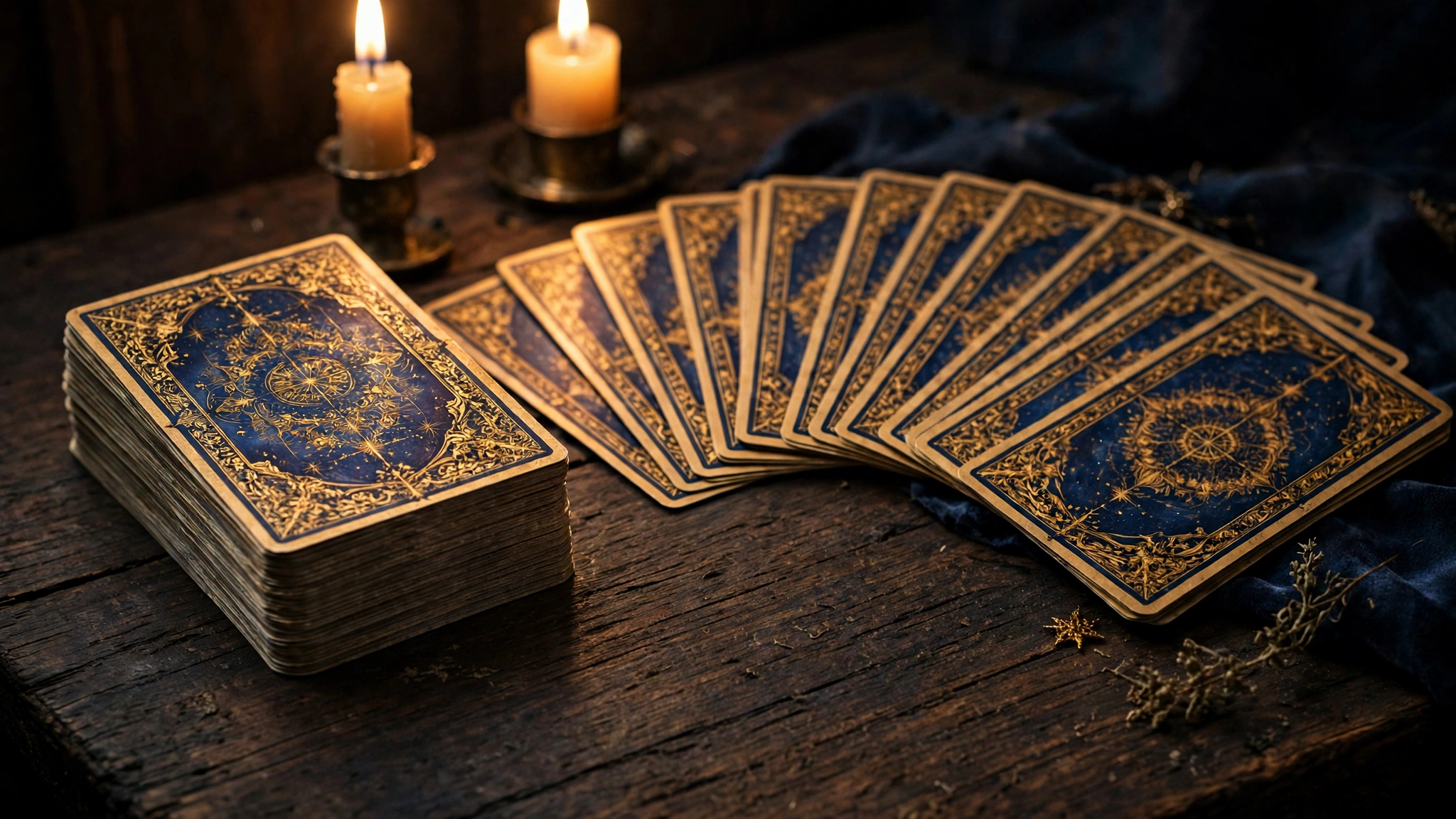
Major arcana vs minor arcana is the first split every tarot student meets, and it is also the most useful one. A standard deck holds 78 cards in total: 22 majors and 56 minors. The majors deal with broad themes and turning points, while the minors deal with the texture of ordinary days. This guide explains the difference in plain terms, what each group covers, and how the two work together in a reading.
The Deck in Numbers
The numbers are simple and worth memorizing. A standard deck has 78 cards in total. The major arcana holds 22 cards, numbered 0 to 21, opening with The Fool and closing with The World. The minor arcana holds 56 cards, in four suits with 14 cards apiece. Every suit runs Ace through Ten, then Page, Knight, Queen, and King as its court cards. Fourteen times four is 56, and 56 plus 22 is 78.
That split is not a ranking of good cards and bad cards. It is a split of scope. The majors describe the large forces in a life, and the minors describe the daily conditions around them. A reading can hold cards from both groups, and most readings do. Learning the split first makes everything else easier, because you can tell at a glance whether a card speaks to a turning point or to a Tuesday.
What the Major Arcana Covers
The major arcana is a sequence of 22 named cards, each standing on its own without a suit. The Fool opens the sequence with a new beginning. The Magician follows with skill, The High Priestess with intuition, The Empress with growth, and The Emperor with structure. Later cards include The Lovers, The Chariot, Strength, The Hermit, Wheel of Fortune, Justice, The Hanged Man, Death, Temperance, The Devil, The Tower, The Star, The Moon, The Sun, Judgement, and The World, which closes the sequence with completion.
Readers treat these cards as archetypes, which means broad human patterns rather than single events. Death in this tradition points to an ending and a change, not a literal death. The Tower points to a sudden break in something that was built on weak ground. The Star points to hope after a hard stretch. Because the majors carry this broad weight, a single major card can set the theme of a whole reading, and several majors together usually mean the question touches something larger than the surface problem.
What the Minor Arcana Covers
The minor arcana covers everyday life in four suits. Each suit has its own flavor, and each card in the suit adds a specific situation to that flavor. The numbered cards, Ace through Ten, show a situation developing or resolving. The four court figures, Page, Knight, Queen, and King, often stand for people, attitudes, or ways of acting in the situation. Together they fill in the details that the majors leave open.
That detail is why minor cards matter so much. A major card may say that a change is coming, but the minor cards show what the change looks like day to day: a conversation, a bill, a delay, a small win. A reading made only of majors can feel grand but vague. A reading made only of minors can feel detailed but narrow. The two groups balance each other, and a good reading uses both.
The Four Suits in Plain Terms
Each minor suit maps to one area of life. Wands link to fire, action, drive, and creative energy. Cups link to water, feeling, relationships, and intuition. Swords link to air, thought, truth, conflict, and communication. Pentacles link to earth, work, money, the body, and material life. These links are traditional associations, and they give you a fast way to sort a card: a Cups card asks about feeling, while a Pentacles card asks about practical matters.
The suits also help you spot weight in a spread. Many Wands cards suggest a period of action and drive. Many Cups cards suggest feeling and relationship questions are central. Many Swords cards suggest a decision or a difficult conversation is near. Many Pentacles cards suggest money, work, or health needs attention. If you want a full tour of the suits on their own, our guide to the tarot suits explains each one card by card, and the minor arcana meanings list gives a short meaning for every minor card.
How the Two Groups Work Together in a Reading
Think of a reading as a story with a theme and a cast. The major cards set the theme, and the minor cards supply the scenes. If The Tower appears with a Five of Pentacles, the theme is sudden change and the scene is a money worry that follows it. If The Star appears with a Page of Cups, the theme is hope and the scene is a new emotional opening. The same major card reads differently beside different minors, which is why context matters more than any single definition.
To practice this, lay three cards and sort them into majors and minors before you read any meanings. Ask what theme the majors set, then ask what the minors add about the details. That two step habit stops the common beginner error of reading every card at the same level. If you are still building the basics, what is tarot covers the deck, the reading process, and the limits of what the cards can say.
What a Reading Full of Major Cards May Suggest
A spread with many major cards usually points to a period of change that reaches beyond the question you asked. The cards suggest that the situation connects to a larger pattern in your life, such as a career shift, a relationship turning point, or a change in how you see yourself. That does not make the reading more certain, and it does not mean the change is good or bad. It means the question has depth, and a slower, more careful reading is worth your time.
When you see many majors, resist the urge to decide everything at once. Note the theme, write down the questions the cards raise, and give yourself a day to sit with them before you act. A reading like this is a prompt for reflection, not a set of orders, and its value is in the thinking it starts. Our guide to tarot meanings can help you look up each major card in turn without losing the thread of the whole spread.
What a Reading Full of Minor Cards May Suggest
A spread with mostly minor cards points to the practical side of a question. The situation is playing out in daily choices, conversations, and small events, and the reading is most useful when it names the next concrete step. Look at which suits dominate, since that tells you where the action sits: Wands for doing, Cups for feeling, Swords for deciding, Pentacles for resources.
Minor heavy readings suit short term questions well, such as how to handle a week at work or a tricky conversation. They also suit follow up readings, where you check how a situation is moving after a major card named the theme. If a minor card puzzles you, read it beside its neighbors rather than alone. A Five of Swords beside a supportive Queen of Cups reads very differently from the same card beside a Ten of Swords, and the neighbors are part of the meaning.
Talking Through a Reading With a Reader
If a spread full of major cards leaves you unsure what to do next, talking it through can help. A reader can point out the theme across the cards and help you turn it into one clear next step, instead of leaving you with a grand idea and no plan. PsychicSmile offers chat readings with real readers for this kind of question. First 3 minutes FREE — every time, for every reading, with all advisors.
Learning the Deck in Order
A sensible way to learn is majors first, then one suit at a time. Learn the 22 majors as a story from The Fool to The World, and you will have the deck's backbone. Then take the suits in any order, learning the Ace through Ten as a rising story and the court cards as four ways of acting. That path takes weeks, not days, and it beats trying to memorize all 78 cards at once.
Practice with short readings as you go, and keep notes on which cards you mix up. The guide on how to read tarot cards walks through a first reading step by step, from shuffling to writing down what the cards suggest. Over time the split between major arcana vs minor arcana will feel natural, and you will read a spread by theme first and detail second, which is the skill that makes the rest of tarot fall into place.
Frequently Asked Questions
How do major arcana and minor arcana differ?
The major arcana has 22 cards that cover broad themes, archetypes, and turning points. The minor arcana has 56 cards in four suits that cover everyday events, feelings, choices, and practical matters. Majors set the theme of a reading, and minors fill in the details.
How do the 78 cards split between major and minor arcana?
A standard deck has 78 cards in total: 22 majors numbered 0 to 21, and 56 minors in four suits of 14 cards apiece. Every suit runs Ace through Ten, then Page, Knight, Queen, and King as its court cards.
What are the four suits of the minor arcana?
Wands, Cups, Swords, and Pentacles are the four suits. Wands link to action and drive, Cups to feeling and relationships, Swords to thought and communication, and Pentacles to work, money, and material life.
Are major arcana cards more important than minor arcana cards?
Major cards carry broader weight because they point to larger themes and turning points. Minor cards are not less useful, since they show the daily details and next steps around those themes. A good reading uses both groups together.
What does it mean if a reading has mostly major arcana cards?
It usually means the question touches a larger pattern in your life, such as a career shift or a relationship turning point. It does not make the reading more certain. Take time to reflect before acting, and read the major cards beside their minor neighbors for context.
Last updated: November 15, 2026
