
How to Use Palo Santo Safely and With Respect
How to Use Palo Santo: The Sweet Smoke of a South American Tree
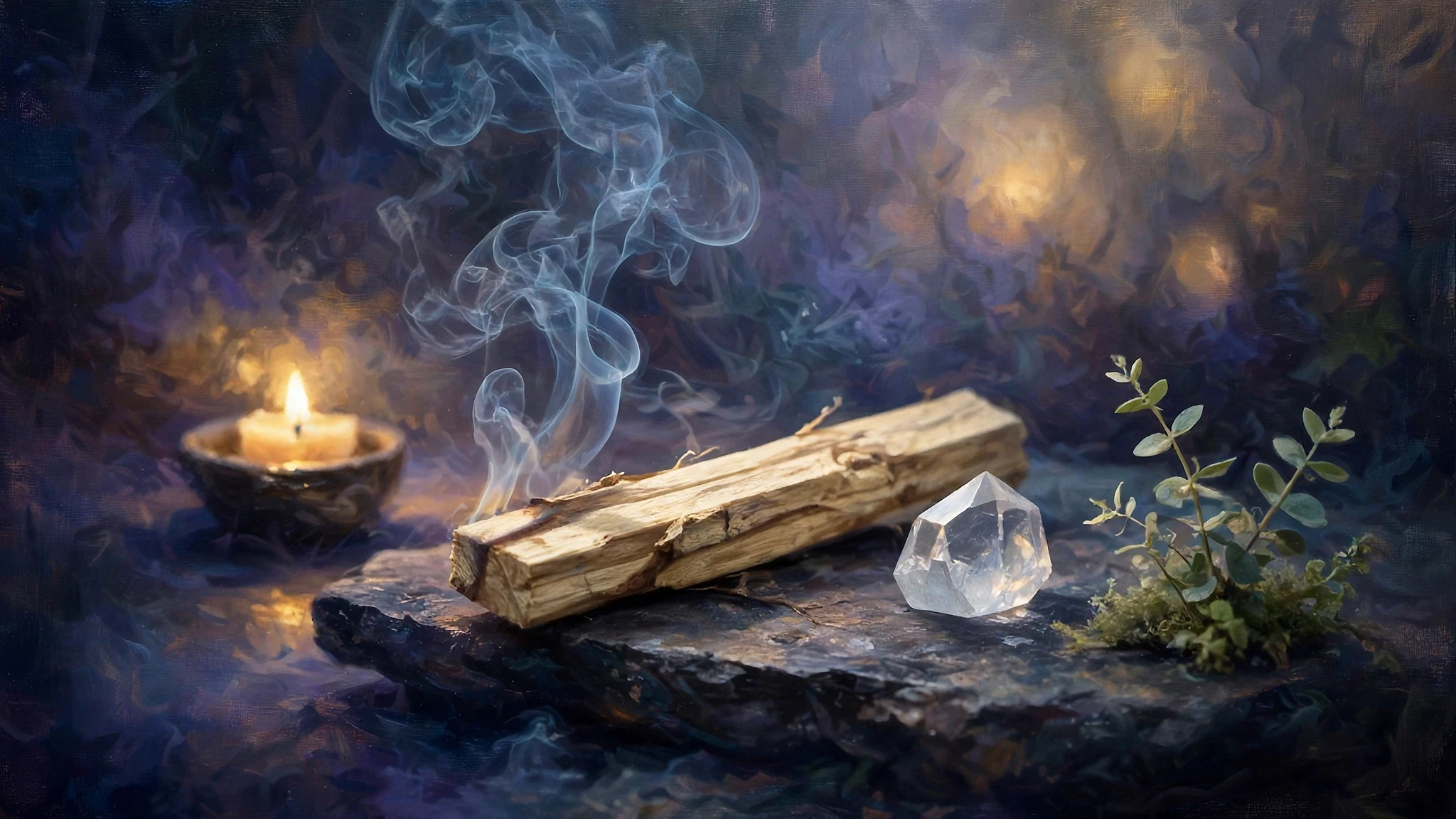
To learn how to use palo santo, start with your nose. Break open a fresh stick and you will smell something warm and sweet, with notes of citrus and pine and a faint sweetness like vanilla. That scent is the reason this wood has been burned as incense for centuries, and it is the first thing to know about it. Palo santo is Spanish for holy wood, and it is the wood of Bursera graveolens, a tree of the dry tropical forests of South America. The tree grows in Ecuador, Peru, and the countries around them, and also in the Galapagos Islands, and it belongs to the same botanical family, Burseraceae, as frankincense and myrrh. In its home region, the wood has long been used in ritual purification and in folk medicine, for stomach aches and for rheumatism, and by curanderos, traditional healers, who pass the smoke over a person in a cleansing called a limpia, to clear heaviness or misfortune. This page teaches you how to use the wood at home: how to choose a stick, how to light it, how to use it for yourself, how to use it in a room, and how to buy it in a way that respects the tree and the people who have worked with it longest. It does not claim that the smoke can force a spirit to leave, or fix a problem on its own. What it offers is a small, fragrant ritual that marks a pause, clears the air, and gives you a quiet moment to set an intention. Used slowly and bought with care, it is a good practice. Used carelessly, it is just smoke.
The Tree, the Wood, and the Fallen Branch Rule
A palo santo stick is not cut from a living tree in the traditional way. It comes from branches that have fallen to the forest floor and rested there for years, and during those years the wood develops the resin and the scent that make it worth burning. That rule, only fallen wood, is the heart of the practice, and it is also a practical matter: young wood has little scent, while aged fallen wood smells rich and sweet. The tree itself is widespread, growing from Mexico through Central America to northwestern South America, which is why the international Red List rates Bursera graveolens as Least Concern, with a stable population. But the picture is different inside Peru, where the tree is listed as critically endangered under national law, and where the government regulates the collection of fallen wood so that trees are not cut for harvest. In January 2026, Peruvian authorities seized more than 1,300 kilograms of illegally sourced palo santo logs in the Piura region, and repeated that only naturally fallen or dead material may be collected. That is a useful fact to carry into a shop, because it tells you what to ask. A seller worth trusting can name the species, Bursera graveolens, can say the wood was gathered as fallen branches, and can say something about replanting. In Ecuador there are reforestation programs for the tree, and a seller who supports them is a seller worth your money. Watch out for a different wood, Bulnesia sarmientoi, sometimes sold under the same name, which is listed as vulnerable. If the label does not name Bursera graveolens, ask. A stick usually looks like a short piece of pale wood, about the size of a pencil, with a resinous surface and a sweet smell even before it is lit. A stick with no scent may be too young, and a stick that smells sharp or chemical may have been treated. Buy a small pack of three or four sticks to start, because one stick lasts for many uses, and a small pack used slowly is better than a large pack bought without thought.
Palo Santo for a Person: A Short Personal Clearing
The most personal use of palo santo is a clearing for yourself, and it is a good first use because it needs no room at all. Choose a quiet moment, open a window, and sit comfortably. Hold the stick at a slight angle and light the tip with a match or a lighter. Let the flame rise for a few seconds, then blow it out gently, so the stick smolders and gives off a thin stream of sweet smoke. Keep a fireproof dish nearby to catch any ash, and hold the stick well away from your hair and clothing. Now pass the smoke slowly around yourself, starting above the crown of the head, then past the nape of the neck, then over the open palms, and then down the front of the body, keeping the stick at a safe distance at all times. Breathe slowly as you do this, and hold one plain intention in mind, such as a wish for a calm evening or a clear head before a difficult conversation. The whole clearing takes about two minutes. When you finish, press the tip of the stick firmly into the dish until no ember remains, and run it under water if you are unsure. Wash your hands, open the window wider for a few minutes, and notice how you feel. Some people use this personal clearing before meditation, before a reading, or after a long day, and a short period of meditation for beginners after the clearing can deepen the quiet it brings. Do not use the smoke on a baby or a small child, and do not use it on a pet. Do not use it at all if you have asthma or a breathing condition, because the smoke, however sweet, is still smoke, and it can irritate lungs. A personal clearing is a small ritual, and its value is in the pause it creates, not in the amount of smoke. A thin stream, a slow breath, and a clear intention are enough.
Palo Santo in Meditation and Before a Reading
Palo santo has a second home, in the quiet minutes before meditation or a reading, and this use suits people who want the wood as a marker rather than as a room cleanser. Light the tip of the stick, let the smoke rise for a few seconds, and then press it out. The scent lingers in the room for a while after the smoke has gone, and that lingering scent becomes a signal to your mind that the quiet time has begun. Sit down, close your eyes, and take five slow, even breaths. Let the scent sit in the background while your attention settles on the breath. Some readers light a stick before a tarot reading or before a chat reading, as a way to mark the shift from the busy day to the focused hour, and then let the scent fade while the reading goes on. The wood does not make the reading better, and it does not make meditation deeper on its own. It marks the boundary between ordinary time and quiet time, and a clear boundary helps the mind settle. You can use the same marker at other turning points: before writing in a journal, before a phone call you have been putting off, or at the end of a working day, when you want to leave the day's tension behind. Keep the use small. One lighting, a few seconds of smoke, and then the stick goes out. A stick used this way lasts for weeks, because you are burning only the tip for a moment each time. If you use palo santo oil in a diffuser instead, follow the diffuser instructions, never apply undiluted oil to skin, and keep the oil away from children and pets. The oil carries the same scent without flame, and it suits a room where an open flame is not welcome. Either form, stick or oil, works as a marker, and the choice is a practical one, not a spiritual one.
A Light Pass Through One Room
When you want to use palo santo in a room, keep the pass light and short. Start by airing the room: open a window, draw the curtains, and let daylight in. Put away clutter from the surfaces you use most, because a tidy room holds the scent better than a crowded one, and a room you can see across feels calmer than a room full of piles. Light the tip of the stick, blow out the flame, and walk gently around the room, letting the smoke drift near the corners and the doorway. There is no need to cover every inch or to fill the room with smoke. A thin stream, a slow walk, and a few minutes are enough. While you walk, hold your intention in mind, or speak it aloud in your own words if that suits you, such as a wish for the room to feel calm and clear. Give a little extra attention to the spot that feels heaviest, such as a corner that always feels cold or a chair where an argument happened, and let the smoke pass there for a few seconds longer. When you have walked the room once, press the stick out in the dish, open the window wider, and leave the room to air for half an hour. The scent will linger pleasantly, and the fresh air will carry the smoke away. This light pass suits a bedroom before sleep, a workspace before a busy day, or a living room after guests have left. It is different from a deep home cleansing with white sage, which our page on how to cleanse your home with sage explains in full, including the history and the respect that practice asks for. Palo santo is the lighter tool, for a single room and a single moment, while sage is the heavier one, for a whole home at a turning point. Our guide to energy cleansing for beginners covers other gentle methods, such as sound and fresh air, that pair well with either wood or leaf.
Buying, Keeping, and Knowing When to Put It Down
Buying palo santo well is part of using it well, and a few habits will help. Buy small amounts from a seller who names the species and says the wood was collected as fallen branches. Look for sellers who support replanting or who work directly with communities in Ecuador or Peru. Avoid large bulk packs with no information about origin, and avoid any seller who claims the wood will cure illness or attract wealth, because those are promises no wood can keep. Store the sticks in a dry place away from heat, such as a drawer or a small box, and keep them away from damp, which dulls the scent. One stick lasts for many uses, because you light only the tip, so a small pack is enough for months. If a stick stops giving off scent, it may be old, and a fresh stick from a trusted seller is a better choice than a large amount of old wood. As for timing, a good rhythm is once a month, or at a turning point such as a move, the full moon, or the start of a season. Our full moon ritual for letting go pairs well with a short palo santo pass, and a monthly rhythm gives the practice a natural home without turning it into a chore. Keep a short note after each use, with the date and how the room felt afterward, so you can see whether the practice helps. If a heavy feeling stays the same after several uses, look at other causes, such as broken sleep, stress, or a practical problem in the home. Our page on what is a haunting can help you sort a repeated pattern from a passing unease, and our page on spiritual protection gathers further guidance. If you are going through a period of change, the spiritual awakening signs page may help you name what is shifting. A stick of palo santo, used slowly, bought with care, and burned safely, is a small ritual that honors both the wood and the home it scents.
If a quiet moment with palo santo has brought a question to mind, a reading can give you space to talk it through and reflect on what you want next. First 3 minutes FREE — every time, for every reading, with all advisors.
For a simple next step, try a One-Card Tarot reading and reflect on what its message brings up about the fresh start you want this week.
Frequently Asked Questions
How do I light a palo santo stick?
Hold the stick at a slight angle, light the tip with a match or lighter, let the flame rise for a few seconds, then blow it out gently so the stick smolders and gives off a thin stream of smoke. Hold a fireproof dish under it to catch ash, and press it out completely when you finish.
Is palo santo endangered?
The species Bursera graveolens is rated Least Concern on the international Red List across its wide range, but Peru lists it as critically endangered within Peru under national law, and collection of fallen wood there is regulated. Buy only from a seller who follows the fallen wood rule and supports replanting.
Can I use palo santo every day?
You can, but most people use it once a month or at a turning point, such as a move or the full moon. A small amount used with intention is better than daily use that turns the practice into a chore. Keep a short note after each use so you can see whether it helps.
Is palo santo safe around pets?
Keep pets out of the room while you burn it, and air the room well afterward. Smoke can irritate breathing, and essential oil should never be applied to a pet or left where a pet can reach it. If a pet has a breathing condition, use sound or fresh air instead.
What is the difference between palo santo and sage?
Palo santo is the aromatic wood of a South American tree, Bursera graveolens, with a sweet, citrus like scent. White sage is the dried leaf of a North American shrub, Salvia apiana, with a sharp, camphor like scent. Both are burned for cleansing, but they come from different plants, regions, and traditions.
Last updated: November 12, 2026
