
How to Make a Vision Board That Guides Your Year
How to Make a Vision Board: A Picture of the Life You Want
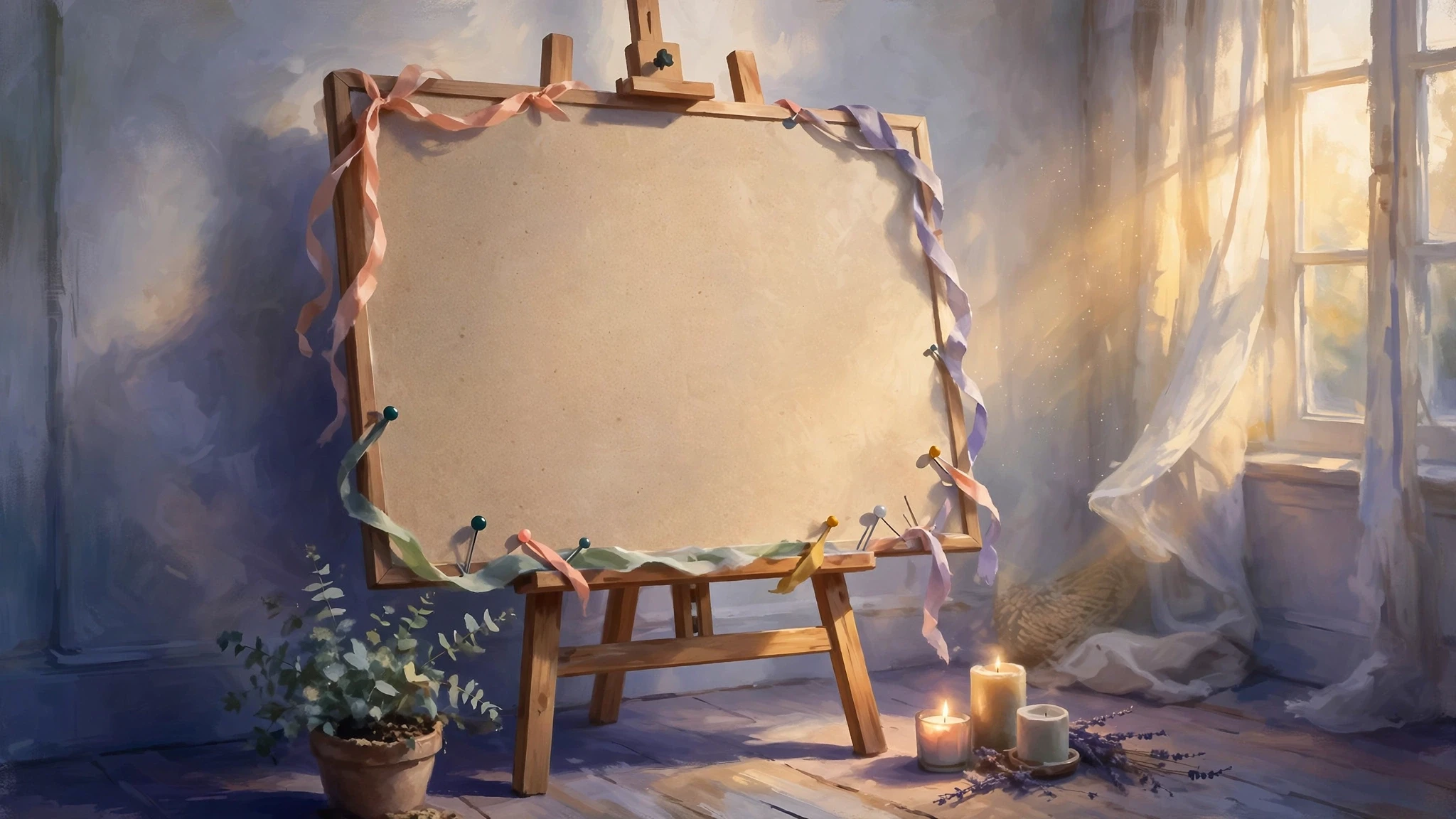
Learning how to make a vision board starts with a clear idea of what one is. A vision board is a physical board, usually a piece of card or cork, covered with images, words, and small objects that show the life you want to build over the coming year. It might hold a photograph of a place you want to visit, a word that names a quality you want to grow, a picture of a home, a job, or a skill you want to learn. The board hangs where you will see it every day, usually in a bedroom or a workspace, and it works as a daily reminder of the direction you have chosen. It is not a magic device, and it does not make things happen on its own. There is no evidence that looking at pictures attracts events, and this page does not claim otherwise. What a vision board does, and what makes it worth making, is simpler: it forces you to choose what matters, it keeps those choices visible, and it prompts small daily actions that add up over a year. A person who looks at a board every morning is more likely to take the next small step toward the life on it, because the step is already in mind. This page teaches the materials, the layout, the wording, and the daily use, so the board you make is one you will actually look at, not one that ends up behind a door by February.
Step One: Choose Your Themes Before You Choose Your Pictures
The most common mistake with a vision board is starting with pictures. Start with themes instead. Sit with a notebook and ask yourself what you want the coming year to hold, in four or five areas of life: home, work, health, relationships, and learning. Write one sentence for each area, in plain words, such as "I want a calmer home," or "I want to learn to cook properly," or "I want to spend more time with my sister." Keep the sentences honest and specific. "I want to be happy" is too vague to picture. "I want a morning walk three times a week" is a picture. "I want more money" is too vague. "I want to save for a trip to the coast" is a picture. Once you have four or five sentences, choose one word for each theme, such as calm, skill, closeness, or travel. These words will become the headings of your board, and they will guide every picture you choose. If a picture does not fit one of your themes, leave it out, however pretty it is. A board with five clear themes is a guide. A board with fifty pretty pictures is a collage, and a collage is harder to live with. Take a day to think about the themes before you buy anything. Talk them over with a friend if that helps, or write them down and read them again the next morning. The themes that still feel right the next day are the ones to build on. If you are going through a period of change, our spiritual awakening signs page may help you name what is shifting, and the themes you choose will reflect that change.
Step Two: Gather Materials and Images That Mean Something
With themes chosen, gather the materials. You will need a board, such as a large piece of card, a cork board, or a foam board, in a size you can hang where you will see it. A board about the size of a large poster, roughly 60 by 90 centimeters, suits most people: large enough to hold several images, small enough to hang in a bedroom. You will also need scissors, glue or pins, and a pen for words. For images, use magazines, printed photographs, postcards, or drawings of your own. Choose images that show the life you want, not the life you want to escape. A picture of a calm kitchen is better than a picture of a stressful office with a cross through it. A picture of a path through trees is better than a picture of a crowded street you want to leave. Look for images that make you feel something when you see them, because a board that stirs no feeling will not hold your attention. For words, cut out single words from magazines or write them by hand in large letters: calm, learn, travel, closeness, health. Handwritten words often work better than printed ones, because they carry your own hand and your own intention. Gather more images than you need, spread them on a table, and sort them into piles by theme. Remove any image that does not fit a theme, and remove any image that feels like someone else's dream rather than yours. A board built from images you chose slowly, over a day or two, will mean more than a board built in an hour from the first magazine you opened.
Step Three: Lay Out the Board So Your Eye Can Follow It
Layout is where a vision board becomes a guide instead of a jumble, and a few simple rules help. Put the most important theme in the center, with its strongest image large and clear. Put the other themes around it, each in its own area, so the board reads like a map with a center and four directions. Leave space between the areas, so the eye can rest and each theme can breathe. A board covered edge to edge with images is hard to look at, and a board with breathing room is easier to return to every day. Put words near the images they belong to, in letters large enough to read from across the room. Put a photograph of yourself, or a word that names you, near the center, because the board is about your life, not a set of strangers' pictures. Avoid putting a deadline or a number on the board unless it helps you, such as a date for a trip you have already booked. A board that says "lose ten kilos by June" turns a guide into a pressure, while a board that shows a morning walk and a healthy meal invites the same action without the pressure. When the layout feels right, glue or pin the images down, starting with the center and working outward. Step back and look at the board from across the room. Can you read the words? Can you see the center? Does each area feel calm? If one area feels crowded, remove an image. If one area feels empty, add a word. The finished board should feel like a clear picture of a year you want, not a busy shop window. Hang it where you will see it first thing in the morning, such as opposite the bed or above the desk, and where no one will hide it behind a door.
Step Four: Use the Board Every Day, in Small Ways
A vision board only works if you use it, and the use is small and daily. Each morning, spend one minute looking at the board. Let your eye travel from the center outward, and notice which image catches you that day. Ask yourself one question: what is the smallest step I can take today toward one image on this board? The step might be a ten minute walk, a phone call, a page of reading, or a small amount saved. Write the step down if that helps, and do it before lunch if you can. Each evening, spend a minute looking at the board again and noticing what you did. This daily rhythm is the real practice, and it is the same rhythm as a morning routine. Our page on how to create a morning ritual can help you fit the minute with the board into a wider morning practice. Once a month, sit with the board for ten minutes and review it. Which theme is moving forward? Which theme has stalled? Is there an image that no longer fits, or a new theme that wants a place? A board is a living guide, not a fixed contract, and it should change as the year changes. Replace an image that no longer fits, add a word that has become important, and remove anything that now feels like pressure rather than invitation. If you use angel numbers or notice signs from the universe in your daily life, you can note them in a journal alongside the board, but the board itself should stay simple and visual. At the end of the year, take the board down, look at it once more, and write down what happened: which themes moved, which stalled, and what you learned. Then make a new board for the next year, carrying forward the themes that still matter.
What a Vision Board Cannot Do, and What to Do Instead
A vision board is a tool for attention and action, and it has clear limits that are worth naming. It cannot attract a job, a partner, or a sum of money by itself, and any claim that it can is a promise no board can keep. It cannot replace a plan, a budget, or a conversation. If your board shows a trip, you still need to save, book, and plan. If your board shows a new skill, you still need to practice, take a class, or find a teacher. If your board shows a calmer home, you still need to tidy, talk, and rest. The board helps because it keeps the goal visible and prompts the small daily step, not because the picture does the work. There are also times when a vision board is the wrong tool. If you are grieving, a board full of future pictures can feel like pressure. If you are facing a difficult decision, a board can narrow your view when you need to keep it open. In those times, a quieter practice, such as journaling or a walk, may serve you better. And if a goal on your board involves work or money, get practical advice as well: a career psychic reading can offer a reflective view, but a real plan needs numbers, dates, and honest talk with the people involved. Our new moon ritual page offers a monthly moment to review a board and renew its themes, and our guide to what is mindfulness can help you look at the board with attention rather than longing. A good vision board leaves you feeling clear and a little excited, not anxious or inadequate. If looking at your board makes you feel worse, change the board. Remove the image that hurts, soften the wording, and make the board a kinder guide. The board serves you, not the other way round.
If you would like a calm, human view on a direction you are considering, a reading can give you space to talk it through and reflect on what you want the year ahead to hold. First 3 minutes FREE — every time, for every reading, with all advisors.
For a simple next step, try a One-Card Tarot reading and reflect on what its message brings up about the theme you want at the center of your board.
Frequently Asked Questions
How big should a vision board be?
A board about the size of a large poster, roughly 60 by 90 centimeters, suits most people. It is large enough to hold several images with space between them, and small enough to hang in a bedroom or above a desk where you will see it every morning.
Should I make a physical board or a digital one?
A physical board works better for most people because it hangs in the room and is seen without opening an app. A digital board on a phone can work if you look at it daily, but it is easy to forget. Choose the form you will actually look at every day.
How often should I look at my vision board?
Look at it for one minute each morning and one minute each evening. Ask what small step you can take today toward one image. Review it for ten minutes once a month, and replace images that no longer fit. Daily attention matters more than a long weekly session.
What if a goal on my board does not happen?
Review it honestly at the end of the year. Some goals stall because life changed, and some stall because the next step was never taken. Keep the themes that still matter, drop the ones that do not, and carry what you learned into the next board. A board is a guide, not a contract.
Can children make a vision board?
Yes. Help a child choose three or four themes, such as learning, play, friends, and health, and let them choose the pictures. Keep the words simple and the board small. A child's board should feel fun and encouraging, never like pressure or a test.
Last updated: November 12, 2026
