
How to Conduct an EVP Session: A Step by Step Guide
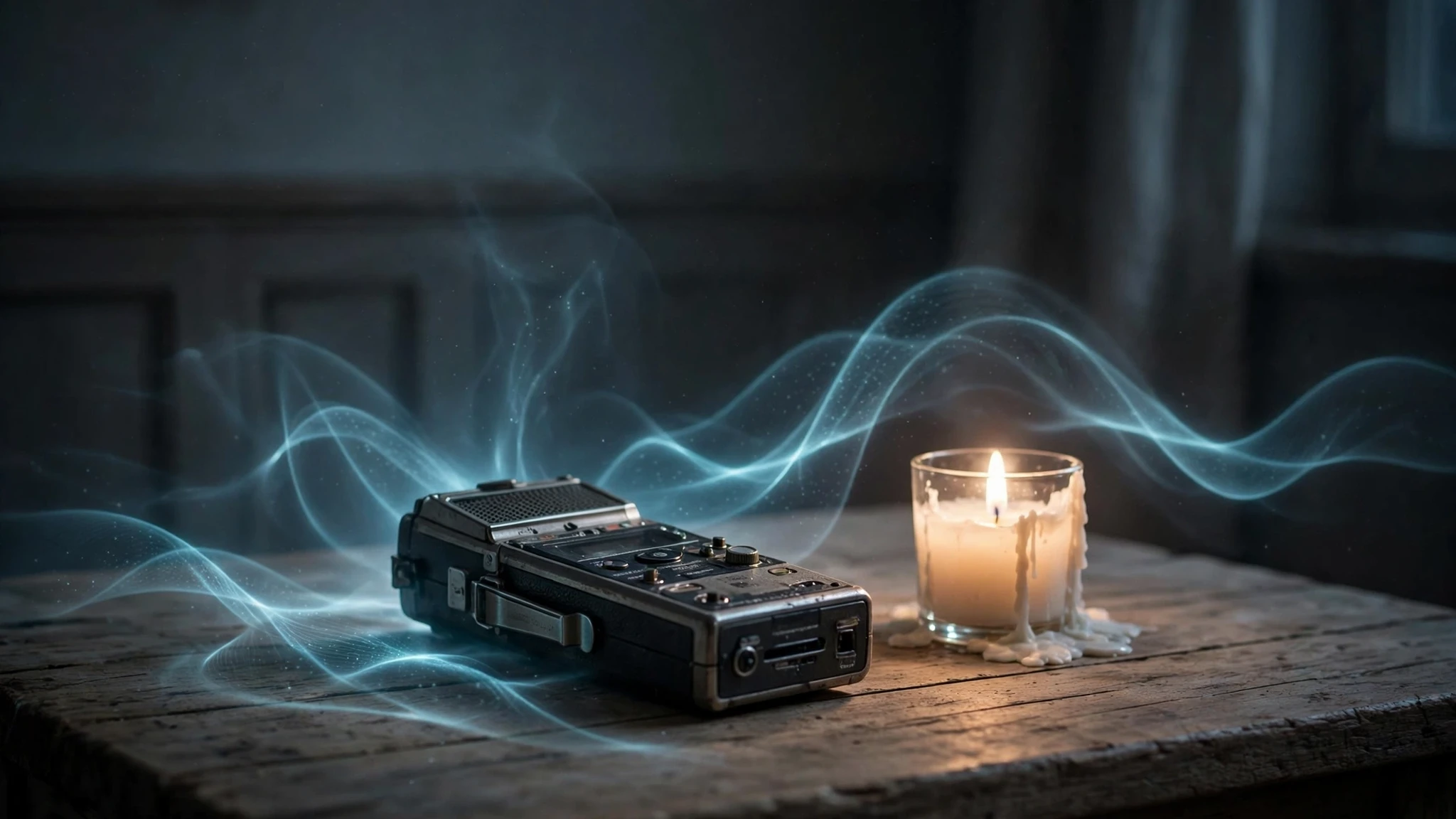
How to Conduct an EVP Session From Setup to Review
Learning how to conduct an EVP session means learning a method, not just pressing record and hoping. EVP stands for electronic voice phenomenon: sounds found on electronic recordings that are interpreted as spirit voices. The sounds are usually brief, often a single word or a short phrase, and they are usually found only when the recording is played back, not heard in the room at the time. A good session is built on controls, clear questions, patient pauses, and honest review. A poor session is built on excitement, leading questions, and hearing what you want to hear. This page teaches the good version, step by step.
This page teaches the practice only. If you want the history first, read history of mediumship for the wider story. The short version is worth knowing before you start: in 1959, the Swedish artist and filmmaker Friedrich Jurgenson was recording birdsong outdoors when he said he heard faint human voices on the tape, including what he took to be his dead father's voice. The Latvian psychologist Konstantin Raudive took up the work, made more than 100,000 recordings, and published his book Breakthrough in English in 1971. That history matters because it sets the standard: Jurgenson and Raudive recorded thousands of hours and checked their results carefully. A single evening with a phone is a beginning, not a conclusion.
Gather the Equipment First
You do not need expensive gear, but you do need the right gear, set up correctly. A digital voice recorder is the standard tool, because it records clean audio and saves files you can review later. A phone can work, but put it in airplane mode first, so calls, messages, and notifications do not interrupt the recording or add sounds to it. Bring wired headphones, not wireless ones, so you can listen back without delay or interference. Bring spare batteries or a charged power bank, a notebook and a pen, and a watch or a clock you can see, so you can log the time of each question.
Choose your recording settings before you arrive. Record in the highest quality the device offers, in an uncompressed format such as WAV if the device allows it. Compressed formats save space by discarding quiet detail, and quiet detail is exactly what you are listening for. Turn off any noise reduction, voice activation, or automatic gain if you can. Those features are designed to clean up speech, and they can create artifacts that sound like voices. Test the recorder at home first: record five minutes of silence in a quiet room, play it back with headphones, and learn what your own device sounds like when nothing is happening. That baseline recording is your control, and it will save you from mistaking your recorder's own hiss for a voice later.
Bring one more thing: a second recorder, or a second phone, if you have one. Running two devices at once is the simplest control in this work. If a sound appears on both recordings at the same moment, it is worth investigating. If it appears on only one, it may be a fault in that device. Two recorders cost little and settle more arguments than any debate ever will.
Choose a Place and Get Permission
The place matters more than the equipment. Choose somewhere quiet, indoors, with as little outside noise as possible. A room in your own home is the best place for a first session, because you know its sounds: the pipes, the refrigerator, the traffic outside, the neighbors. A place you do not know is full of sounds you cannot identify, and every unidentified sound becomes a possible voice. If you do want to try a reputed location, such as an old house or a historic site, go in daylight first, walk the rooms, and learn the building's ordinary noises before you record anything at night.
Permission is not optional. Never record in someone else's home without their clear agreement. Never enter private property, a closed building, or a cemetery after hours. If you are investigating a place that belongs to someone else, get written permission, agree on the hours, and tell them what you will do and what you will share afterward. Respect is part of the method: a session conducted with permission is calm and focused, while a session conducted by trespass is rushed and nervous, and nervous people hear things that are not there. Tell one person outside the session where you are and when you expect to finish, especially if you are out at night.
Prepare the room before you start. Close the windows. Turn off the television, the radio, and any appliance that hums or clicks. Ask everyone present to silence their phones and to avoid whispering, shuffling, or moving during recording. Put a sign on the door if you need to, so nobody walks in halfway through. A quiet room is not a luxury. It is the control that makes the whole session worth doing.
Run a Control Recording Before You Ask Anything
Every session should begin with a control recording, and this is the step most beginners skip. Record ten minutes of the empty room with nobody speaking, nobody moving, and nothing happening. Note the time you started. This is your baseline: it captures the refrigerator, the pipes, the distant traffic, and the recorder's own noise. Later, when you review the session, you can compare any strange sound against this control. If the same sound appears in the control recording, it is the room, not a voice.
Next, record a spoken identification at the start of the session. State the date, the time, the place, and the names of everyone present, in a clear voice. This does two things. It timestamps the session, so you always know when each part happened. And it gives you samples of every person's voice, so you can recognize them later if a voice on the tape turns out to be someone in the room breathing, sighing, or shifting in a chair. Many so called voices are later identified as a person in the room, and the identification recording is what makes that identification possible.
Then record a few minutes of ordinary conversation, with everyone speaking normally. This gives you a second control: the sound of real voices in this room, on this recorder, at this distance. A voice that appears later can be compared with these samples for tone, distance, and clarity. A whisper from across the room sounds different from a voice recorded close to the microphone, and that difference is one of the checks you will use in review.
Ask Questions the Right Way
The question method is the heart of an EVP session. Ask one question at a time, in a clear, calm voice, and then wait in silence for ten to fifteen seconds before you ask the next one. The wait is the point. Spirit voices, if they appear, are usually found in the silence after a question, not during it. Asking questions too quickly, or talking over the silence, buries whatever might have been there. Count the seconds silently if you have to. Fifteen seconds of silence feels long in a room full of people. It is exactly as long as it needs to be.
Ask open, respectful questions, not leading ones. "Is anyone here with us?" is a good opening question. "Can you tell us your name?" is a good second question. "Is there anything you would like us to know?" is a good third. Avoid questions that suggest the answer, such as "Are you the man who died here in 1920?" A leading question invites the listener to hear the suggested answer in any faint noise. Avoid yes or no questions that can be answered by a random sound. Avoid rapid fire questioning, overlapping voices, and two people asking different questions at once. One person should ask all the questions in a session. Everyone else should stay silent.
Keep the session to thirty to forty five minutes of recording. Longer sessions produce tired listeners, and tired listeners hear voices in static. Plan twelve to fifteen questions at most, with silence between each one. Speak the question number aloud before each question, such as "Question four," so you can find it easily during review. At the end, record a closing statement: the time, a thank you to anyone who may have been present, and a clear statement that the session is over. The closing matters. It marks the end of the work, and it gives the room back to ordinary life.
Review the Recording the Right Way
Review is where most EVP claims are made and where most of them fall apart, so do it properly. Wait at least a day before you review. Fresh ears hear more clearly than tired ones, and a day of distance protects you from hearing what you hoped to hear in the room. Listen with wired headphones, in a quiet place, at a comfortable volume. Do not turn the volume up to maximum. Extreme volume turns ordinary hiss into voices. Listen to the whole recording from start to finish, without skipping, and log every sound that seems unusual, with its time stamp.
Grade what you find. Investigators often use a simple three level scale. Class A is a voice that is clear, loud enough to hear without enhancement, and understood the same way by everyone who listens. Class B is a voice that is fairly clear but needs headphones and careful listening, and that most listeners understand the same way. Class C is a faint or unclear sound that needs enhancement and that different listeners hear differently. Class A and B are worth keeping. Class C is worth noting and nothing more. If three listeners hear three different words in the same sound, it is not a voice. It is noise, and your brain is filling in the gaps.
Use blind review whenever you can. Give the recording to someone who was not in the room, without telling them what you think you heard or where to listen, and ask them to write down anything unusual they notice, with time stamps. If they find the same sound at the same time and hear the same words, your finding is stronger. If they find nothing, or hear something different, your finding is weaker. Blind review is the single best protection against fooling yourself, and it costs nothing but a little patience. Keep a log of every session, every question, and every finding, with dates. A log over months is the only way to see whether your results are improving or whether you are finding the same few ambiguous sounds again and again.
Know the Ordinary Explanations
Every EVP has ordinary explanations, and a serious investigator knows them all. Radio interference is the first: a recorder can pick up fragments of radio, television, or a nearby phone, especially in a building with old wiring. Pareidolia is the second: the human brain is wired to hear speech in random noise, the same way it sees faces in clouds. A faint hiss can sound like a word if you expect a word. Apophenia is the third: the tendency to find patterns in random data, so that a series of unrelated sounds starts to feel like a conversation. Cross contamination is the fourth: a voice from another room, a person outside, or a sound from earlier on the same tape can leak into a recording.
Check each finding against these explanations before you call it a voice. Could it be radio? Play the recording on a different device. Could it be pareidolia? Ask a blind listener what they hear. Could it be someone in the room? Compare it with the identification recording. Could it be the recorder itself? Compare it with the control recording and with the second recorder, if you ran one. A finding that survives all four checks is worth keeping. A finding that fails one check is worth noting and setting aside. Honesty in review is what separates an investigator from a storyteller, and the log is where that honesty lives.
Stay Safe, Respectful, and Grounded
EVP work is gentle on the surface and can be unsettling underneath, so set limits before you start. Never conduct a session alone in a place that frightens you. Never conduct a session when you are grieving hard, sleeping badly, or feeling low. Grief and exhaustion make it hard to tell what you are hearing and harder still to set it down afterward. If a session leaves you frightened, stop. Close the session with the same words you would use at the end, leave the place, and do something ordinary: eat, walk, talk to a friend. The recording will still be there tomorrow. Your peace of mind matters more than any single sound.
Be respectful in what you ask and in what you share. Do not ask a spirit to prove itself. Do not taunt, mock, or demand. Do not record in a cemetery without permission, and do not share recordings that name living people or private addresses. If you publish a finding, say plainly how it was recorded, what controls you used, and what the blind review found. A claim without controls is a story, not evidence, and the field is full of stories already. What it needs is careful work, honestly reported. The types of mediumship page places EVP work among the other forms of mediumship, evidential mediumship explains the standard of evidence serious practitioners aim for, and how a medium reading works describes what a sitting looks like from the client's side. The mediumship hub gathers all of these guides in one place.
If you want to develop the listening side of this work further, start with what is clairaudience for the definition, then the how to develop clairaudience page in this batch teaches the inward version of the same skill: quiet sitting, a sound journal, and the checks that separate reception from imagination. The two practices share habits and equipment, but they are different aims. One listens inward. The other listens to the tape. Practice both, and each will make the other sharper.
An Illustrative Example: The First Session in the Spare Room
This example is illustrative, not a real person's story.
A woman named Grace, a 47 year old teacher, ran her first EVP session in her own spare room, a room where she sometimes felt uneasy. She recorded a ten minute control, spoke her identification, and asked twelve questions with fifteen seconds of silence after each one. On review the next day, she found one sound after question seven, a faint two syllable noise that she first heard as a name. She sent the clip to her brother without telling him what she heard, and he wrote back that it sounded like a chair creaking. She listened again, and once she knew what to listen for, the creak was obvious. She logged it as a chair, not a voice, and kept the recording. The lesson is not that the session failed. The lesson is that the session worked exactly as it should: the controls caught the ordinary sound, the blind review corrected the first hearing, and the log kept the truth. That is a successful first session, even though it found no voice at all.
If you would like support while you explore this work, remember that you can speak with a real advisor about what you have been hearing and recording. First 3 minutes FREE — every time, for every reading, with all advisors.
For a simple next step, try a One-Card Tarot reading and reflect on what the card suggests about listening more carefully this week.
Frequently Asked Questions
What equipment do I need for an EVP session?
A digital voice recorder, or a phone in airplane mode, recording in the highest quality available, ideally in an uncompressed format such as WAV. Add wired headphones, spare batteries, a notebook, and a second recorder if you have one. Test the recorder at home first, and record a control of the empty room so you know what your device sounds like when nothing is happening.
What questions should I ask during an EVP session?
Ask one open, respectful question at a time, then wait ten to fifteen seconds in silence. Good questions are "Is anyone here with us?", "Can you tell us your name?", and "Is there anything you would like us to know?" Avoid leading questions that suggest the answer, and avoid rapid fire questioning. One person should ask all the questions in a session.
How do I know if an EVP is real?
Use controls and blind review. Compare the sound with your control recording, with the identification recording of everyone present, and with a second recorder if you ran one. Give the clip to someone who was not there, without telling them what you heard, and see if they hear the same words at the same time. If different listeners hear different words, it is noise, not a voice.
Is it safe to conduct an EVP session?
A session in your own home, with permission, in daylight or early evening, and with another person present, is safe for most people. Do not conduct a session alone in a place that frightens you, or when you are grieving hard or sleeping badly. If a session leaves you frightened, close it, leave, and do something ordinary. The recording will still be there tomorrow.
How long should an EVP session last?
Thirty to forty five minutes of recording is enough, with twelve to fifteen questions at most and ten to fifteen seconds of silence after each one. Longer sessions produce tired listeners, and tired listeners hear voices in static. Review the recording the next day, with headphones, at a comfortable volume, and log every unusual sound with its time stamp.
Last updated: November 12, 2026
