
How to Balance Your Chakras: Seven Center Guide
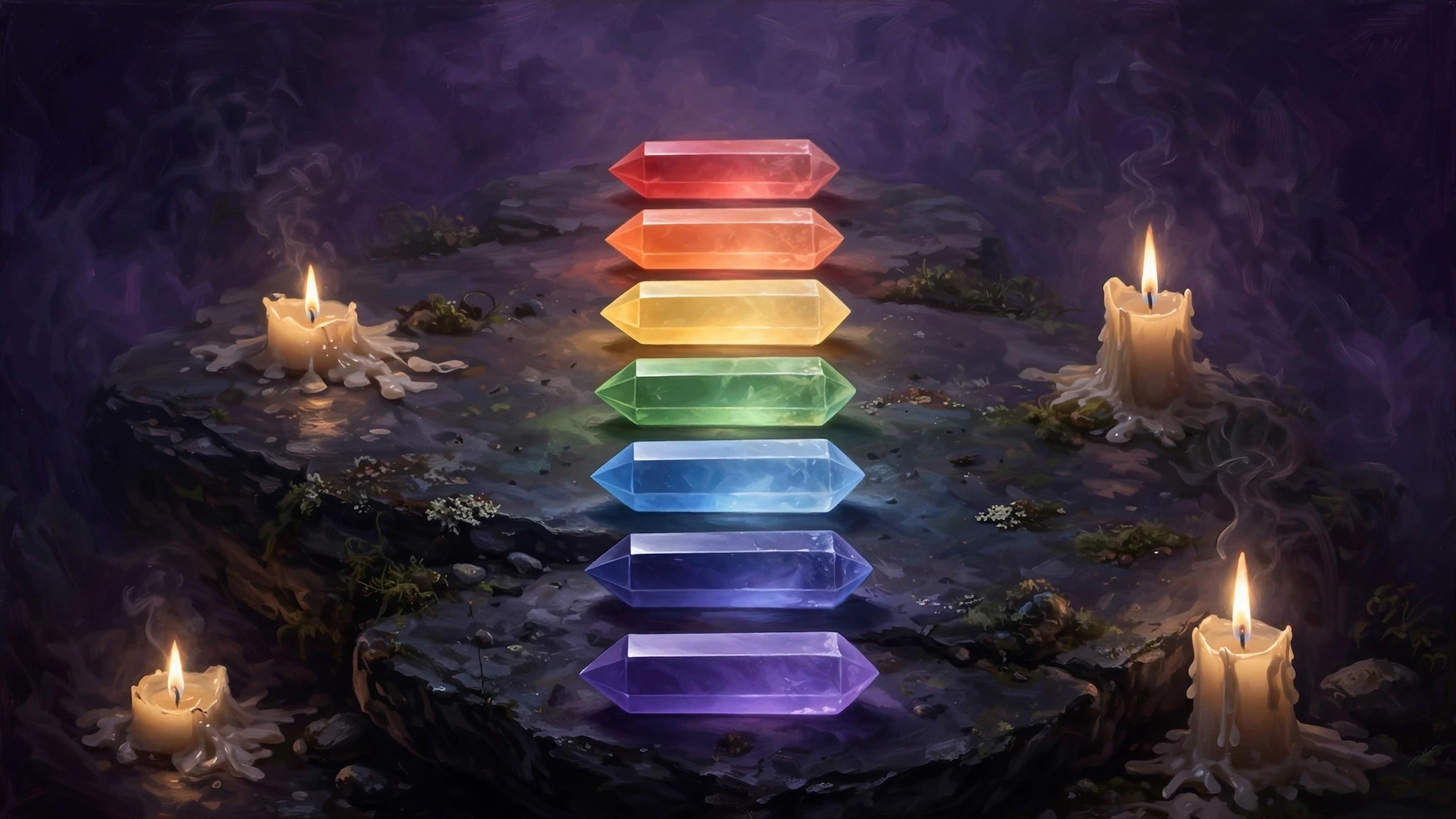
How to Balance Your Chakras: The System, Not One Center
Learning how to balance your chakras is a different job from learning how to open them. Opening, covered in the guide on how to open your chakras, is about activating one center at a time. Balancing is about the whole system: seven centers in proportion, none dominating the others, each supporting the rest. This page stays on the balance, and it does not repeat the opening methods.
The seven centers, as most Western readers know them, run from the base of the spine to the crown of the head: root, sacral, solar plexus, heart, throat, third eye, and crown. The Sanskrit word chakra means wheel, and the centers are described in tantric and yogic traditions as lotus shaped focal points along the central channel of the body. The familiar seven center arrangement traces to the Sat Cakra Nirupana, composed by Purnananda in 1577, which describes six centers plus the thousand petalled lotus at the crown, and it reached English readers in 1919 when Sir John Woodroffe, writing as Arthur Avalon, published his translation as The Serpent Power. The rainbow colors most people associate with the centers were added in the 20th century West, above all by Charles Leadbeater in The Chakras, published in 1927. There is no scientific evidence that chakras exist as physical structures, and this page presents them as a traditional map for reflection and practice, not as anatomy. Balancing the chakras is one of the practices people begin during a period of change, when the body itself feels out of balance and a traditional map offers a place to start. The guide to spiritual awakening signs covers the wider experience of change that often prompts that search.
The Seven Centers in Brief, and What Balance Means
The root center, Muladhara, sits at the base of the spine, is described with four petals and the element earth, and is linked in modern teaching with safety, grounding, and survival. The sacral center, Svadhisthana, sits near the pelvis, has six petals and the element water, and is linked with feeling, pleasure, and creativity. The solar plexus center, Manipura, sits at the navel, has ten petals and the element fire, and is linked with will, confidence, and personal power. The heart center, Anahata, sits at the chest, has twelve petals and the element air, and is linked with love, compassion, and connection.
The throat center, Vishuddha, sits at the throat, has sixteen petals and the element ether or space, and is linked with speech and truth. The third eye center, Ajna, sits between the eyebrows, has two petals, and is linked with intuition and inner seeing. The crown center, Sahasrara, sits at or above the crown, is described as a thousand petalled lotus beyond the elements, and is linked with awareness and connection to something larger than the self. Balance means that no one center dominates: a person is neither all grounding and no vision, nor all vision and no grounding, and the heart sits in the middle, joining the lower three and the upper three.
How Imbalance Is Described, Center by Center
Practitioners describe imbalance in two directions for each center: underactive, meaning quiet, blocked, or neglected, and overactive, meaning loud, dominating, or excessive. An underactive root is described as feeling unsafe, scattered, or unable to settle, while an overactive root is described as rigid, fearful of change, or obsessed with security. An underactive sacral is described as numb or joyless, while an overactive sacral is described as restless, seeking constant stimulation. An underactive solar plexus is described as lacking confidence, while an overactive one is described as controlling or domineering.
The same pattern runs upward. An underactive heart is described as closed or guarded, while an overactive heart is described as giving without limits and losing oneself. An underactive throat is described as unable to speak up, while an overactive throat is described as talking without listening. An underactive third eye is described as unable to imagine or to trust inner sensing, while an overactive one is described as lost in fantasy. An underactive crown is described as feeling disconnected, while an overactive one is described as ungrounded, living in ideas rather than in life. Those descriptions are traditional, not medical, and they should never be used to diagnose a health condition.
A Daily Practice for the Whole System
A balancing practice is short, regular, and even: a few minutes for the whole system, not an hour on one center. Sit comfortably, breathe slowly, and bring attention to each center in turn, from the root to the crown, spending about a minute on each. At each center, notice how it feels, warm or cold, tight or open, quiet or busy, and breathe into it without forcing a change. Finish by sitting quietly for a minute and noticing the system as a whole, as if listening to a chord rather than a single note.
Do that practice once a day, at the same time, for a month, and keep a short note afterwards: which centers felt tight, which felt open, and how the day went. The note matters more than the feeling in the moment, because it shows whether the practice is changing anything over time. Pair the sitting with movement, a walk, stretching, or yoga, because the body is part of the system, and a practice done only in the head will not balance a system that lives in the body. A warm bath taken slowly can be part of the same routine, and the guide to what is a spiritual bath explains that practice.
Practices for the Lower Three Centers
The lower three centers, root, sacral, and solar plexus, are the centers of the body, feeling, and will, and their practices are physical and practical. For the root, the practices are grounding: walking barefoot on grass or soil, eating regular meals, keeping a steady sleep time, and putting your home in order. For the sacral, the practices are creative and sensory: cooking a meal, dancing, painting, gardening, or simply doing something pleasurable without a purpose. For the solar plexus, the practices are about will in small doses: finishing one small task, keeping one promise to yourself, or speaking up once in a meeting.
Those practices are deliberately ordinary, because the lower centers are about ordinary life, and they are balanced by living it well rather than by special exercises. If the root feels shaky, the answer is more likely to be a regular routine than a longer meditation. If the sacral feels numb, the answer is more likely to be a walk, a meal, or a creative hour than a crystal. The guide to the root chakra meaning gives the traditional detail for the first center, and the guide to what are chakras sets out the system as a whole.
Practices for the Heart and the Upper Three Centers
The heart center sits in the middle, and its practices are relational: listening without interrupting, saying thank you, forgiving a small slight, or spending time with someone you love. The heart is balanced by connection, and the simplest practice is a conversation in which you listen more than you speak. The guide to the heart chakra meaning gives the traditional detail for this center.
The upper three centers, throat, third eye, and crown, are the centers of speech, vision, and awareness, and their practices are quieter. For the throat, the practice is honest speech: saying what you mean, once, clearly, and then listening. For the third eye, the practice is inner seeing: visualization, journaling a dream, or simply sitting with a question without demanding an answer. For the crown, the practice is stillness: a few minutes of silence, a walk in nature, or a moment of gratitude for something larger than yourself. The balance across all seven comes from giving each group its share: body, heart, and mind, in turn, each day.
An Illustrative Example: Noor and the Uneven Week
This example is illustrative, not a real person's story.
Noor, a 40 year old accountant, kept a chakra journal for a month and noticed a pattern: her solar plexus felt loud every day, her throat felt tight, and her root felt quiet. She was working long hours, making decisions all day, and never speaking up in meetings, while skipping meals and sleeping badly. The journal showed her the imbalance in plain terms: will without voice, effort without grounding. She changed three small things: a regular lunch break and a walk for the root, one spoken question in each meeting for the throat, and a ten minute evening practice for the whole system.
After a month, the journal showed a different pattern: the root felt steadier, the throat felt less tight, and the solar plexus felt less loud. Noor later said the chakras had given her a language for what she already knew, that she was overworking and under speaking, and that the language had helped her act. The example shows the honest use of the system: a map for noticing, not a diagnosis, and a prompt for small, practical change.
When Balance Practice Is Not Enough
Chakra balancing is a reflective practice, not a treatment, and it should never replace medical care. If you feel anxious, low, or exhausted for more than two weeks, if sleep or appetite are badly affected, or if you have a physical symptom that worries you, see a doctor. The chakra map can help you describe how you feel, but it cannot diagnose or treat a condition, and any practitioner who claims otherwise should be avoided.
Use the practice as a daily habit alongside ordinary care: regular sleep, meals, movement, and contact with people who matter. If the practice helps you notice a pattern and act on it, keep it. If it becomes a worry, a source of guilt, or a reason to ignore medical advice, stop it and talk to someone you trust. If you would like to talk through what you have been noticing, and hear a calm, honest response, you can do that here in a first conversation. First 3 minutes FREE — every time, for every reading, with all advisors.
For a simple next step, try a One-Card Tarot reading and reflect on what the card suggests about the center that most needs your attention.
Frequently Asked Questions
What does it mean to balance your chakras?
Balancing your chakras means bringing the seven centers into proportion, so that no one center dominates the others. It is about the whole system, not about opening one center at a time, and it is practiced with a short daily attention to each center in turn.
How do I know if a chakra is blocked?
Practitioners describe an underactive center as quiet or tight and an overactive one as loud or dominating, with different signs for each center. Those descriptions are traditional, not medical, and they should never be used to diagnose a health condition.
How long does it take to balance chakras?
Practitioners describe balancing as a daily habit measured in weeks and months, not a single session. A short daily practice of a few minutes per center, kept for a month with a written note, gives a fairer picture than any one session.
Can I balance all seven chakras at once?
Yes, that is the point of balancing: a short practice that moves through all seven centers in turn, from root to crown, giving each about a minute. Opening work focuses on one center; balancing work covers the whole system evenly.
Do I need crystals or tools to balance chakras?
No. The core practice is attention, breath, and movement, with ordinary habits such as regular sleep, meals, and walking. Crystals and other tools are optional and supportive, and they do not replace the daily practice.
Last updated: November 12, 2026
