
Eight Card Tarot Spread: A Layout That Covers the Whole Question
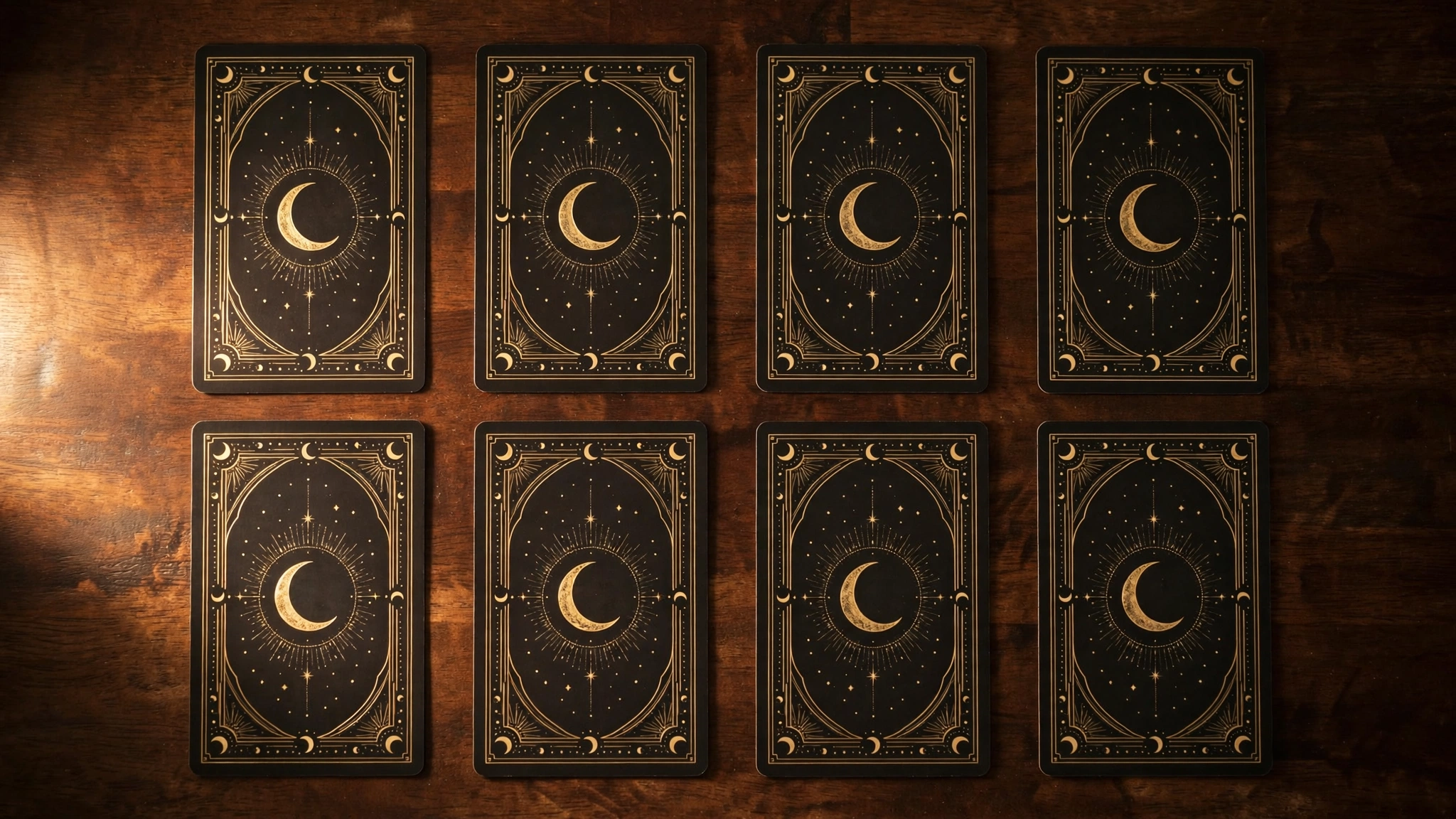
An eight card tarot spread is a layout that covers the whole question. It sits between the quick three card reading and the long ten card Celtic Cross, and that middle size is its strength. Three cards can leave a big question half answered, and ten cards can bury the message under detail. Eight cards give you room to see the past behind the question, the present around it, the hidden factor, the advice, and the direction it can take, while still keeping the reading focused enough to hold in your head when you walk away.
Use this spread when a question has several moving parts, such as a choice that touches work, money, and family at once, or a relationship question where history, feelings, and practical limits all matter. The layout below is a general purpose eight card spread, so it works for almost any question, and you can return to the same layout again and again until its positions feel familiar.
Why Eight Cards
Eight is a balanced number for a reading. It is large enough to show contrast, such as what supports the question against what works against it, and small enough that each card still carries real weight. A reading with eight cards usually takes twenty to forty five minutes to do well, so it fits a relaxed session rather than a rushed one.
The spread also teaches a useful habit. Because each position has a distinct job, you cannot bend a card to mean whatever you wish it meant. The card in the advice position must be read as advice, and the card in the hidden factor position must be read as something outside your current view. That discipline keeps the reading honest, and it is the reason experienced readers often prefer a fixed layout over pulling cards with no positions at all. If you are new to tarot, this spread is a good step up from a three card layout, and our guide to tarot spreads can help you compare the common layouts before you begin.
The Eight Positions
Lay the cards in two rows of four. The top row covers the situation, and the bottom row covers the forces around it and the way forward. Deal the cards face down, then turn them over in order from position 1 through position 8.
Position 1: The heart of the question. This card names what the question is really about, underneath the words you used to ask it. It may confirm your question, or it may show that the real issue sits one layer deeper. If this card surprises you, trust the surprise and let it reshape how you read the rest.
Position 2: What supports it. This card names the strength, resource, or ally that works in your favor. It may be a skill you already have, a person who stands with you, or a habit that steadies you. Do not overlook a quiet card here. Support often looks ordinary until you notice how much it carries.
Position 3: What works against it. This card names the obstacle, the pressure, or the habit that stands in the way. It may be external, such as a lack of time or money, or internal, such as fear or a wish to keep everyone happy. Name it plainly, because an obstacle you can name is an obstacle you can plan around.
Position 4: The past behind it. This card looks at the history that shaped the question, such as an earlier choice, an old promise, or a pattern you learned long ago. The past does not decide the future, but it explains why the present feels the way it does.
Position 5: The present around it. This card shows the current moment, including the mood, the pressures, and the openings that exist right now. Read it beside position 4, because the contrast between past and present often shows how far the situation has already moved.
Position 6: What is hidden. This card points to the factor outside your current view, such as a need you have not named, a piece of information you lack, or a feeling you have set aside.
Position 7: Advice. This card points to the wisest next move, or to the attitude that will serve you best. It may suggest patience, honesty, rest, or a bold step, and it may surprise you by suggesting the opposite of what you planned. Read it as guidance to weigh, not as an order to obey.
Position 8: Where it can lead. The last card shows the direction the situation can take if the present pattern holds and the advice is followed. It is a likely direction, not a fixed outcome, because your choices after the reading still shape what happens. Read it as a horizon to walk toward or to steer away from, with your eyes open.
How to Read the Spread as One Story
Read the eight cards in order first, then read them again in groups. Positions 1, 4, and 5 form the story of the question: its heart, its past, and its present. Positions 2 and 3 form the balance of forces: what helps and what hinders. Positions 6, 7, and 8 form the way forward: what is hidden, what is advised, and where it can lead.
Here is how the groups can sound in practice, using an unnamed reader who asked about a career change. The supporting card showed a practical skill built over time, while the opposing card showed a fear of letting a good income go. The hidden card pointed to a need for creative work that the reader had stopped naming. The advice card suggested a small test, such as one project on the side, rather than a sudden leap. The final card pointed toward slow growth rather than instant change.
Common Mistakes to Avoid
The most common mistake is asking two questions at once. If you ask about a job and a relationship in the same spread, the cards cannot tell you which answer belongs to which question. Ask one question, name it clearly, and save the second question for its own spread. Another mistake is reading position 8 as a promise. It shows a direction, and directions change when people change their minds or their actions.
Keep a written record. Write down the question, the eight cards, and one sentence for each position, then revisit the notes after a few weeks. You will learn more from comparing your notes with real events than from any single reading, and your skill with the spread will grow with each comparison.
Using This Spread in a Chat Reading
Eight cards give a reader plenty to work with, and a chat reading is a good setting for this layout, because you can ask follow up questions as each group is read. A good reader will walk through the story groups in order, will point out the contrasts between support and obstacle, and will keep position 8 honest by calling it a direction rather than a promise. If you would like to try this layout with a reader on PsychicSmile, ask for the eight card whole question layout by name in a chat reading. First 3 minutes FREE — every time, for every reading, with all advisors.
To prepare, read our guide to tarot reading for the basics of how a reading works. If your question is really a choice between two paths, the tarot spread for decision making may fit even better. When a single card in this spread deserves a closer look, the most powerful tarot cards guide explains the heavyweight cards in the deck. And if you want a quick single card reading first, try our one card tarot tool to find the theme before you commit to eight cards.
Frequently Asked Questions
What is an eight card tarot spread?
It is a general purpose layout that covers the whole question. Its positions look at the heart of the question, what supports it, what works against it, the past, the present, a hidden factor, advice, and where it can lead.
When should I use an eight card spread instead of a three card spread?
Use eight cards when the question has several moving parts, such as a choice that touches work, money, and family at once, or a monthly check in on your whole life. Use three cards when the question is simple and a short answer will do.
How long does an eight card tarot reading take?
A careful eight card reading usually takes twenty to forty five minutes, including time to read the cards in groups and ask follow up questions. Rushing through eight cards in a few minutes misses the contrasts that make the spread useful.
Can I use the eight card spread for any question?
Yes. The layout is general purpose, so it works for career, love, money, personal growth, and most other questions. Ask one clear question per spread, because two questions in one layout will blur the answers.
What does the last card in an eight card spread mean?
The last card shows where the situation can lead if the present pattern holds and the advice is followed. It is a direction, not a fixed outcome, because your choices after the reading still shape what happens.
Last updated: November 15, 2026
