
Dark Night of the Soul: Signs, Stages & Getting Through
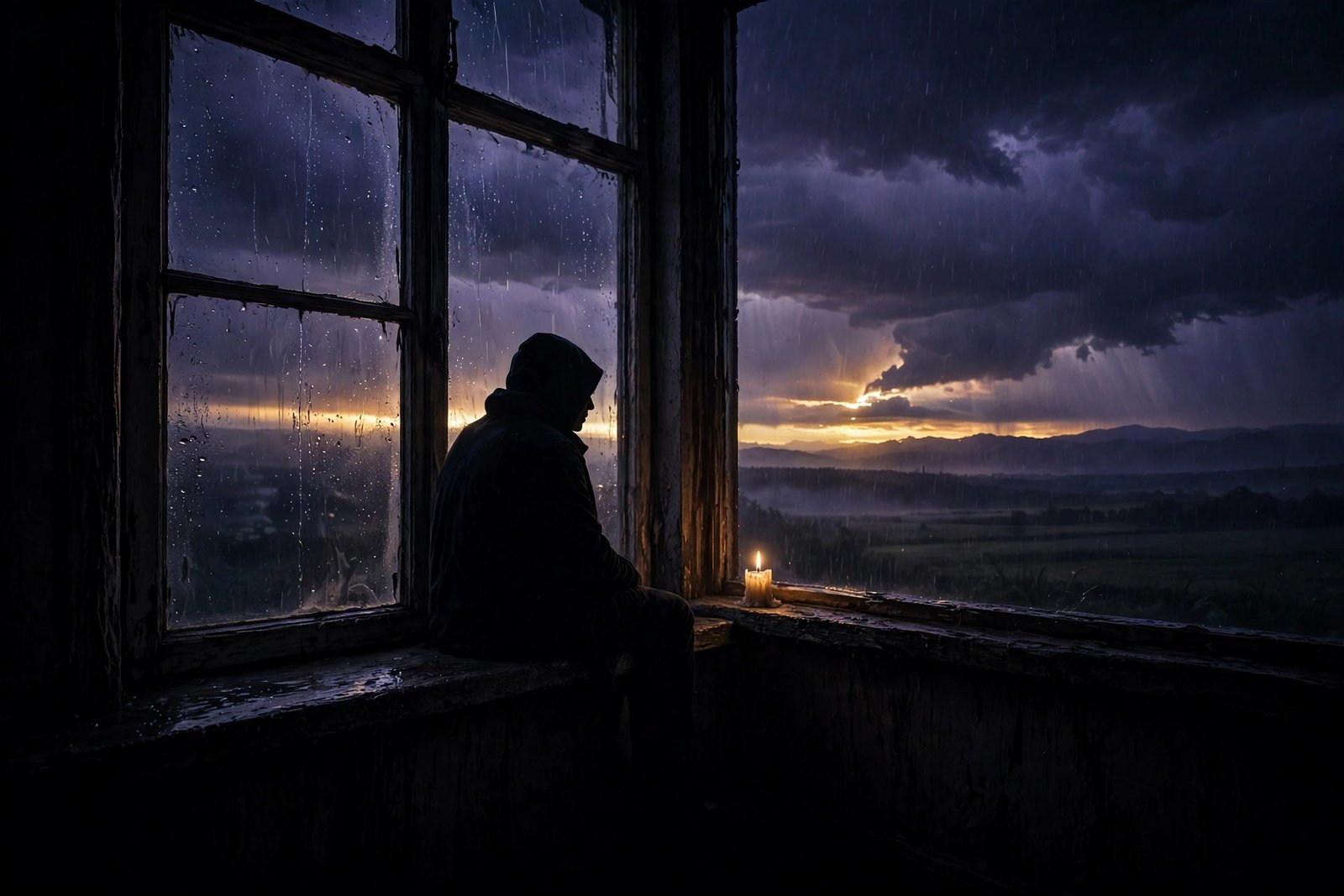
If you're reading this in the middle of the night, with a hollow feeling in your chest and no one to explain it to, I want you to know something first: you're not broken. What you're feeling has a name, and people have walked through it for centuries — not unscathed, but not unchanged either.
The phrase "dark night of the soul" gets used a lot these days, sometimes carelessly. But beneath the buzzword is a real human experience: a period when meaning drains out of the things that used to matter, when the practices and beliefs that once steadied you suddenly feel empty, and when you can't quite explain what's wrong because nothing is "wrong" — and everything is. If that sounds familiar, this guide is for you. No platitudes. Just honest language for what you're going through, the signs, the stages, and what genuinely helps — including when to reach for professional support.
Where the Phrase Comes From
The phrase comes from St. John of the Cross, a 16th-century Spanish mystic who wrote a poem called "Noche oscura del alma" — Dark Night of the Soul. It describes the soul's painful passage through spiritual dryness and darkness on its way toward union with the divine. It was written as poetry of devotion, not as a self-help concept.
In modern spirituality, the meaning has widened. Today a "dark night of the soul" usually describes a period of deep existential or spiritual crisis: a collapse of meaning, a sense of being abandoned by God, the universe, or meaning itself, and a disorientation that touches identity, purpose, and faith. The religious framework is gone for many people who use the term — what remains is the darkness, and the passage through it.
7 Signs You're in a Dark Night of the Soul
1. Things that once gave your life meaning now feel flat. The work you cared about, the relationships that filled you, the goals that pulled you forward — they haven't changed, but your feeling toward them has. It's not disappointment. It's more like the color drained out while you weren't looking.
2. You feel abandoned by God, the universe, or whatever you believed in. Prayers feel like talking into an empty room. Practices that once brought peace now bring nothing — or irritation. Whether your faith was religious, spiritual, or simply a trust that life had some kind of order, that trust has gone quiet.
3. You feel numb and in pain at the same time. This is one of the strangest parts. There's a deep ache underneath, but the surface is flat — like grief wrapped in cotton. You might cry at odd moments or feel nothing when you think you should feel something. Both are part of it.
4. Old identities are dissolving. The version of you that had it together — the believer, the achiever, the partner, the person with a plan — feels like a costume that no longer fits. You may not know who you are anymore, and that not-knowing is its own kind of terror.
5. You've pulled away from the spiritual practices that once helped. Meditation feels pointless. The books that once moved you now annoy you. You might have stopped journaling, stopped attending services or circles, stopped reaching out to teachers. It isn't laziness — it's that the tools stopped working, and forcing them feels dishonest.
6. You're grieving, but there's no clear thing you're grieving. No one died. Nothing dramatic happened. Yet you carry a sorrow you can't pin down. It may be grief for a version of yourself, a worldview, a sense of certainty — losses that are real even though no one else can see them. This invisible grief can be the loneliest part.
7. You feel "in between" selves. You're no longer who you were, but you aren't someone new yet either. It's a hallway with no doors — or doors you can't yet see. The old life doesn't fit, the new one hasn't arrived, and the waiting itself becomes the experience. If you've ever read about spiritual awakening signs, you may notice some overlap: awakening often begins with exactly this kind of dissolution.
If several of these feel uncomfortably familiar, you may be in it. That recognition alone can bring a strange relief — not because it fixes anything, but because it means this has a shape, and shapes can be walked through.
The Stages
There is no official map for this, and no two people move through it the same way. These stages are a loose framework drawn from how people commonly describe the experience — not a ladder, and definitely not a timeline. You may revisit stages, skip one, or live in two at once. That's normal.
1. The Unraveling. Something loosens. It might be triggered by a loss, a betrayal, a burnout, or nothing you can name at all. The beliefs, routines, and identities that held your life together start to come apart. This stage often feels like failure — as if you're doing life wrong. You're not. The unraveling is usually the first honest thing that's happened in a while.
2. The Void. This is the emptiest part. Meaning is gone, motivation is gone, and the practices that used to refill you have stopped working. Days can feel long and textureless. People in this stage often describe feeling invisible, even to themselves. It's frightening, and it's also the stage where the deepest questioning happens — the kind that can't be rushed or argued with.
3. The Surrender. Not giving up — giving in. At some point, the fight to get the old life back exhausts itself, and something quieter takes its place: acceptance that you don't know what's next. This isn't a dramatic breakthrough. It often looks like a Tuesday where you simply stop demanding that today feel meaningful. Surrender here means laying down the resistance, not laying down your life.
4. The Rebuilding. Slowly, unevenly, something new begins to form. Not a return to who you were — that person is gone — but the outline of someone different, built from what survived.
A word of honesty: this framework is descriptive, not prescriptive. Nobody can tell you which stage you're in or how long it lasts, and anyone who claims they can is selling something. What matters is that the darkness has movement in it, even when you can't feel it moving.
Dark Night vs. Depression — How to Tell the Difference
This is the question that matters most, and it deserves care rather than confidence. A dark night of the soul and clinical depression can look similar from the outside — withdrawal, flatness, loss of interest, grief without a clear cause. But they are not the same thing, and confusing them can be dangerous in both directions: dismissing depression as "just spiritual" can keep someone from getting help they need, while pathologizing a genuine spiritual crisis can make a meaningful passage feel like a malfunction.
There are some general patterns people report. A dark night of the soul often centers on meaning — the crisis is about purpose, faith, and identity, and a person may still function day to day: going to work, caring for family, keeping up appearances while feeling hollow inside. Depression, by contrast, more often impairs functioning itself — getting out of bed becomes hard, concentration collapses, and the emotional tone is a pervasive hopelessness or emptiness that touches everything, not just the big questions. Some people describe it this way: in a dark night, you grieve the loss of meaning; in depression, even the capacity to grieve feels gone.
But here is the essential truth, stated plainly: the overlap is real, and no article — including this one — can tell you which one you're experiencing. Only a qualified mental health professional can distinguish a spiritual crisis from clinical depression, and many clinicians now recognize that the two can coexist. If you're unsure which you're facing, treat it as a health matter first. That is always the right call. If you are in crisis or having thoughts of harming yourself, call or text 988 (US Suicide & Crisis Lifeline) right now — or text HOME to 741741 to reach the Crisis Text Line.
Spiritual framing is a lens, never a substitute for care. If the darkness is deepening, if functioning is slipping, or if anything in you is frightened by how you feel — please reach for professional support alongside anything else you do. That isn't a failure of faith or spirit. It's wisdom.
What Actually Helps
There is no shortcut through this. But there are things that make the passage more bearable — not by fixing it, but by keeping you tethered while it does its work.
Keep one small routine. When everything feels meaningless, meaning won't come from grand gestures. It comes from tiny, repeatable acts: making the bed, a morning walk, tea at the same hour. Routines don't cure the darkness, but they give the day a skeleton when your inner structure has collapsed.
Tell one trusted person the unfiltered truth. Not the polished version. The real one: "I feel empty and I don't know why." You don't need advice or fixing — you need one person who knows what's actually happening inside you. If there's no such person in your life right now, a therapist or counselor can be that person. That's literally what they're for.
Journal without editing yourself. Write the ugly, contradictory, embarrassing truth. No one will read it. The dark night thrives in vagueness — "I just feel bad" — and journaling forces specificity, which is the beginning of understanding. Some people find that pulling a single tarot card for reflection — not for answers, just as a mirror — gives their journaling a starting point on days when the blank page feels impossible.
Spend time in nature or real silence. Not as a productivity hack or a spiritual performance. Just be somewhere the world is bigger than your thoughts: under trees, near water, in an empty room with your phone off. The void feels less total when you're standing inside something vast and indifferent to your crisis.
Make something, even badly. Draw, write, cook, garden, play music badly, rearrange a room. Creation is the opposite of dissolution, and it doesn't need to be good or meaningful. It just needs to be yours. Many people discover that the rebuilding stage begins with something as small as a sketchbook.
Practice patience as an actual practice. Not passive waiting — active patience. Each morning, remind yourself: "I don't know how long this lasts, and I don't have to know today." The timeline is genuinely unknowable, and fighting that unknowability is what turns a hard passage into a tormenting one. Letting the question rest is itself a kind of strength.
What doesn't help: anyone telling you to "just think positive," or that "everything happens for a reason." If those phrases make you want to scream, your instincts are correct. Bypassing the darkness with forced optimism doesn't shorten it — it just adds loneliness to it.
If You're in Crisis
You don't have to earn help by being "bad enough." If you're struggling, these are free, confidential, and available right now:
- Call or text 988 — the Suicide & Crisis Lifeline (US). Trained counselors, 24/7, for any emotional crisis — not only suicidal thoughts.
- Text HOME to 741741 — the Crisis Text Line (US). Text with a live counselor any time, about anything that's weighing on you.
Reaching out is not weakness and not drama. It's the single most effective thing you can do on the hardest days.
A Small Mirror for Reflection
Some people find it grounding, during a dark night, to sit with a single image or symbol and let their own thoughts surface around it — not looking for predictions or answers, just a mirror for what's already inside.
If that sounds like it might help, you can pull a single card for reflection — one card, one quiet moment, no answers promised. Just a mirror.
If talking this through with someone would help — not a lecture, not a script, just a real conversation — you can join PsychicSmile. First 3 minutes FREE — every time, for every reading, with all advisors.