
Arcana Iris Tarot Deck Guide: Color, Light and Meaning
A Deck Built Around One Flower
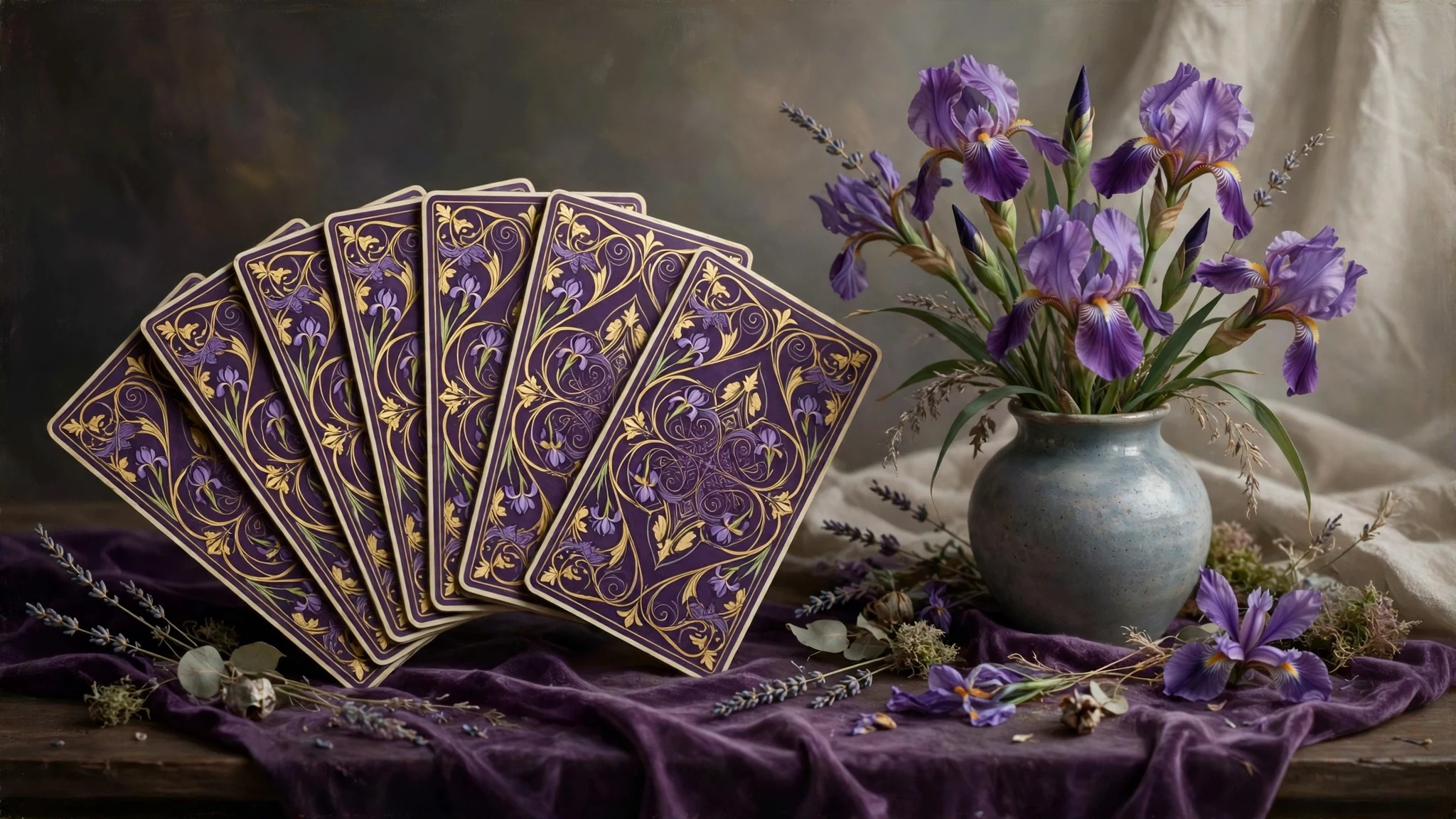
This arcana iris tarot deck guide begins with a deck that takes its name and its whole visual language from the iris, a flower that has carried meaning for centuries. In the language of flowers, the iris stands for faith, hope, wisdom, and messages passed between worlds, and the deck leans into all four. Petals open across the cards in purples, blues, golds, and soft greens, and the flower appears again and again, sometimes as the center of the image, sometimes as a small detail at the edge, waiting to be noticed. A reader who picks up this deck is not buying a set of pictures. They are buying a garden to walk through, one card at a time.
The deck follows the familiar tarot structure, 22 major arcana cards and 56 minor arcana cards across the four suits, so a reader who already knows tarot can use it at once. What changes is the mood. The imagery is softer and more flowing than the bold lines of older decks, and the cards invite slow looking rather than quick answers. This arcana iris tarot deck guide is written for a reader deciding whether that mood fits their practice, and it stays with what the cards actually show, rather than promising what they will do for you.
What the Iris Means on the Cards
An iris is a flower of thresholds. It grows at the edge of water and land, it blooms briefly, and its petals carry a shape that looks like a bridge. The deck uses that idea throughout. The High Priestess holds iris petals like a veil. The Star pours water beside iris stems that bend toward it. The Ace of Cups holds a single iris above a still pool. None of these images need a book to explain them. The flower does the explaining, quietly, in the language of color and shape.
Color carries much of the meaning here. Purple iris petals point to thought, spirit, and the inner life. Blue petals point to calm, honesty, and clear speech. Gold details point to warmth, value, and the light that makes a garden grow. Green stems and leaves point to the everyday work of tending something living. A reader can learn a great deal from this deck simply by asking, in each card, which color leads the image and what that color is doing. The suits keep their usual elements, cups for feeling, pentacles for the material world, swords for thought, wands for energy, and the iris imagery sits on top of that structure like a second language.
The Major Arcana in Bloom
The major arcana cards in this deck are the most flower rich of all, and they reward a reader who looks at them as a set. The Fool walks a path lined with small white irises, the first sign that the journey is watched over. The Magician works at a table where an iris in a vase stands beside the tools of the trade, a reminder that skill needs beauty beside it. The Empress sits in a garden where irises grow thick around her feet, and the image makes her abundance feel rooted rather than decorative. Death shows an iris closing at dusk, a gentle image for an ending, and the Sun shows irises opening in full light.
These are not the only images in the major arcana, and a reader should spend time with each card on its own before reading them together. The deck asks for that patience. Its major arcana cards do not shout their meanings. They suggest them, the way a garden suggests a season, and the suggestion grows stronger the longer you look. A reader who likes bold, direct imagery may find this deck too quiet. A reader who likes to sit with a card and let it speak slowly will find it suits them well.
Reading the Minor Arcana by Color and Season
The minor arcana cards in this deck use the seasons as a quiet thread. Pentacles cards often show iris roots and soil, the work underneath the bloom. Cups cards often show water and petals floating on it, feelings that move and settle. Swords cards often show iris stems cut and laid in order, thoughts arranged and examined. Wands cards often show stems reaching up toward light, energy growing toward a goal. The seasonal thread is not a rule the deck announces. It is a pattern a reader notices after using the deck for a few weeks, and noticing it is part of learning the deck.
Court cards in this deck are worth a careful look, because they show people among flowers rather than people on thrones. The Page of Cups holds an iris like a gift. The Knight of Wands rides past a field of purple blooms. The Queen of Pentacles tends a garden bed with her hands in the soil. The King of Swords stands beside a tall iris and looks out over a still landscape. These images make the court cards feel like people you could meet, rather than ranks you must memorize. The guide to the tarot suits explains the four suits in full, and the iris imagery adds a layer on top of that knowledge, not a replacement for it.
Who This Deck Suits, and Who It Does Not
This deck suits a reader who reads slowly, journals often, and likes beauty as part of the practice. It suits morning readings, evening reflection, and questions about growth, healing, and inner life. It suits a reader who wants their deck to feel calm in the hand and gentle on the eye. It also suits a reader learning tarot, because the familiar structure means nothing has to be relearned, and the soft imagery means mistakes feel less harsh. A wrong guess with this deck feels like a misread garden, not a failed test.
It suits less well a reader who wants sharp, fast answers to practical questions. A question about a contract deadline or a job interview may feel better served by a deck with bolder, more direct imagery. It also suits less well a reader who reads for other people in busy settings, where cards must be read at a glance across a table. The iris deck asks the reader to look closely, and close looking takes time. None of this is a flaw in the deck. It is a matter of fit, and fit is what choosing a deck is really about. The hub page on how to choose a tarot deck covers fit in more detail, and the same questions apply here.
Handling, Size, and Everyday Use
The cards are a comfortable size for most hands, with a smooth finish that shuffles well and a back design that carries the iris motif without giving away the card. The borders are slim, which lets the artwork breathe, and the card titles are printed in a clear, readable type that does not compete with the image. Readers who shuffle by riffle will find the cards bend without creasing, and readers who shuffle by overhand will find them easy to control. Keep the deck in its box or a cloth bag, away from damp and direct sun, and the colors will stay true for years.
A new deck benefits from a short settling in period. Spend a few evenings looking through the cards in order, major arcana first, then each suit, and write a line or two about the cards that catch your eye. Then do a few small readings for yourself before reading for anyone else. That slow start teaches you the deck's voice, which is quieter than the voice of a bolder deck, and easier to miss if you rush. The universal waite tarot deck guide makes a useful comparison here, because the Waite imagery is bolder and more direct, and reading the two guides side by side shows what changes when the art changes.
An Illustrative Example: June and the Garden Question
This example is illustrative, not a real person's story.
June, a 47 year old gardener, had bought the Arcana Iris deck because the flower on the box matched the irises she grew along her own fence. She had been thinking about whether to cut back her hours at the nursery and spend more time on her own garden design work. She pulled three cards from the deck one evening after watering. The first was the Four of Pentacles, and the iris roots in the image made her think of the steady income she was afraid to lose. The second was the Star, and the iris stems bending toward water made her think of the design work she kept returning to, the work that felt like hope. The third was the Page of Pentacles, and the young figure tending a garden bed made her think of starting small, one client, one garden, one season. June did not quit her job. She took on one design client, then another, and the slow start the cards had suggested turned out to suit her. The deck had not answered her question with a yes or a no. It had shown her the roots, the hope, and the small beginning, in images she already knew by heart.
A First Reading to Try With This Deck
A good first reading with this deck uses three cards and one question about growth. Ask what is growing, what needs tending, and what is ready to bloom. Lay the cards left to right and read them in that order, letting the flower imagery guide you. What is growing may show as a stem reaching up. What needs tending may show as a plant in shade. What is ready to bloom may show as a petal opening. The garden language will feel natural with this deck, because the deck speaks it fluently, and the reading will teach you how the deck handles your questions.
Keep the reading short and write it down. A few lines in a notebook, the date, the question, the three cards, and what you noticed in each image, are enough. Return to the note in a month and see what grew. The deck rewards that kind of attention, and the reader who gives it will find the iris imagery opening up card by card, season by season, until the whole deck feels like a garden they know well.
If you would like to talk through a reading from this deck with a reader, a chat reading can look at your cards with you and help you find the practical step inside the images. First 3 minutes FREE — every time, for every reading, with all advisors.
To compare this deck with the classic that shaped most modern tarot, the rider waite tarot deck guide explains the deck most readers start with, and how to read tarot cards covers the suits and the court cards for any deck you choose. A One-Card Tarot reading is a gentle way to meet a new deck, one card at a time.
Frequently Asked Questions
What is the Arcana Iris tarot deck known for?
It is known for its iris flower imagery, soft flowing artwork, and calm reflective mood, with the iris standing for faith, hope, and wisdom across the cards.
Is the Arcana Iris deck good for beginners?
Yes, it follows the standard tarot structure, so beginners can learn with it, and its gentle imagery makes early readings feel less harsh.
How many cards are in the Arcana Iris deck?
It has the standard 78 cards, with 22 major arcana cards and 56 minor arcana cards across the four suits.
What kind of questions suit the Arcana Iris deck best?
It suits questions about growth, healing, and the inner life best, and it is less suited to fast practical questions that need a sharp direct answer.
How should I start using the Arcana Iris deck?
Look through the cards in order over a few evenings, note the ones that catch your eye, then try small readings for yourself before reading for anyone else.
Last updated: November 12, 2026
